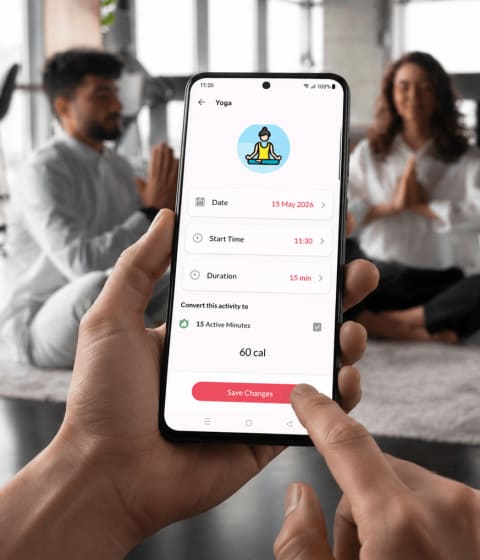

Employee health screening is a voluntary, employer-organized health assessment that combines biometric measurements, lab tests, and a health questionnaire to flag risks early. It is a preventive check, not a diagnosis. The purpose is to give HR aggregated workforce health data and give each employee a personal picture of where they stand.
Adoption is still partial. In 2025, 43% of large firms and 22% of smaller firms (10 to 199 workers) gave employees the opportunity to complete a biometric screening, according to the KFF Employer Health Benefits Survey (2025). For HR teams, that gap is the opportunity. Vantage Fit is a corporate wellness platform that runs health risk assessments, lab-report analysis, and follow-up challenge programs for companies of 500 to 10,000+ employees, which is the layer that turns a one-off screening into an ongoing program.
KEY TAKEAWAYS
- Employee health screening is the data layer of a wellness program: it flags health risks early so HR can act before they turn into absenteeism and claims cost.
- In 2025, 43% of large firms and 22% of smaller firms offered biometric screening (KFF), so a well-run program is still a differentiator rather than a baseline expectation.
- The three decisions that make or break a program are which screening types to offer, how to stay ADA, GINA, and HIPAA compliant, and how to protect employee privacy.
- A screening measures; a health risk assessment asks. Most effective programs run both, because each answers a question the other cannot.
- The payoff comes from turning one-off screening results into a year-round program where HR sees only aggregated trends, never individual health data.
The business case is easiest to see one person at a time. George, an engineer at a mid-sized tech firm in Seattle, kept mentioning chest pains to colleagues, who pushed him toward the monthly screening his office ran. The check-up flagged atherosclerosis, a narrowing of the arteries that can turn life-threatening. He saw a specialist and recovered without surgery. One screening, one catch, one avoided crisis.
Multiply that across a workforce and the pattern becomes a number leadership can act on. This guide covers what screening includes, the types worth offering, the legal boundaries, and how to run a program that produces something more useful than a stack of one-off results.

What is employee health screening?
Employee health screening is an employer-organized assessment that measures an employee's current health status through biometric readings, laboratory tests, and a health questionnaire. It identifies risk factors such as high blood pressure, elevated blood sugar, or high cholesterol before symptoms appear. It does not diagnose conditions or replace a physician.
Screening covers assessing employees' health status, detecting risks early, and supporting workplace safety. In roles with exposure risk, it also limits the spread of infectious disease.

What screening programs aim to achieve
- Disease prevention: Early detection stops manageable conditions from becoming chronic, and stops contagious illness from moving through a workplace.
- Workplace safety: Confirms employees are fit for duty in roles where physical or cognitive capability is a safety requirement.
- Risk visibility for HR: Turns individual results into an aggregate picture of where the workforce's health risk actually sits.
- Employee trust: A company that pays for people to know their own numbers is making a visible statement about how it treats them.
Common methods used to assess health status
- Questionnaires: Self-reported symptoms, exposure history, family history, and lifestyle habits.
- Biometric measurement: On-site readings of blood pressure, height, weight, BMI, and waist circumference.
- Physical examination: Fitness-for-duty checks where physical capability is part of the job.
- Diagnostic tests: Blood panels, lipid and A1C tests, drug tests, and other laboratory evaluations.
What are the different types of employee health screenings?
The right mix depends on the job, the industry, and the workforce. Most programs combine a biometric core (blood pressure, BMI, cholesterol, blood sugar) that applies to everyone with role-specific tests driven by exposure and safety requirements. Offering every test to every employee is expensive and rarely useful.
The table pairs each type with what it checks and why it matters to an HR team, so you can decide which ones belong in your program.
| Screening type | What it checks | Why it matters to HR |
|---|---|---|
| Physical examination | General and job-specific check-up; vital signs such as blood pressure, pulse, and temperature | Confirms fitness for duty and flags issues before they affect safety or attendance |
| Biometric measurements | Height, weight, BMI, and waist circumference | The headline workforce metric and the easiest before-and-after to show leadership |
| Blood tests | Blood sugar, cholesterol, liver and kidney markers, and blood count | Surfaces diabetes and metabolic risk at an aggregate, trackable level |
| Cardiovascular screening | Blood pressure, cholesterol, and ECG/EKG | Early flag for a leading driver of chronic-disease cost and absence |
| Vision and hearing tests | Visual acuity, color and peripheral vision, and auditory function | Essential for driving, machinery, and high-noise roles, and supports safety compliance |
| Respiratory (pulmonary) screening | Lung capacity and function | Required for roles exposed to dust, fumes, or chemicals |
| Musculoskeletal assessment | Muscle, bone, and joint health | Reduces injury and workers' comp risk in physically demanding jobs |
| Drug and alcohol testing | Pre-employment, random, and post-accident tests | Supports workplace-safety policy and regulatory compliance |
| Immunizations and titers | Vaccination history and immunity checks | Important for healthcare and public-facing roles |
| Cancer screenings | Mammograms, Pap smears, and prostate and skin checks | Early detection lowers severity, cost, and long leave |
| Mental health screening | Signs of stress, depression, and anxiety | Addresses a top driver of presenteeism and turnover |
| Infectious disease screening | Tuberculosis, hepatitis, and HIV tests | Vital for healthcare and community-service roles |
| Dermatological screening | Skin checks for unusual moles and skin cancer | Matters for outdoor and chemical-exposure roles |
| Radiological screening | X-rays, MRIs, and other imaging | Used where there is a risk of physical injury |
| Specialized, role-specific tests | Neurological, vision, and other job-specific exams (for example, pilots or commercial drivers) | Meets role and regulatory requirements |
| Emergency-preparedness screening | Temperature checks, symptom questionnaires, and rapid tests | Activated during outbreaks to keep the workplace open and safe |
A screening flags risks; it is not a full medical exam. Employees should see a specialist or their own doctor for diagnosis and treatment.
Suggested Read: Top Biometric Screening Companies and What Is a Biometric Test?
Health screening vs health risk assessment: what is the difference?
A health risk assessment (HRA) is a questionnaire that captures what employees report about their lifestyle, history, and habits. A health screening is a measurement that captures objective data such as blood pressure, cholesterol, and blood sugar. One asks, the other measures. Programs that run both get context and hard numbers from the same cycle.
The distinction matters at budget time, because the two have very different cost profiles and very different failure modes.
| Health risk assessment | Biometric health screening | |
|---|---|---|
| Method | Self-reported questionnaire | Clinical measurement and lab tests |
| What it captures | Diet, activity, sleep, stress, tobacco use, family history | Blood pressure, BMI, cholesterol, blood glucose, A1C |
| Cost per employee | Low, often bundled into a wellness platform | Higher, driven by vendor, panel, and on-site logistics |
| Main weakness | Accuracy depends on honest self-reporting | A snapshot in time, with no lifestyle context |
| Best used for | Segmenting the workforce and targeting interventions | Establishing a measurable baseline and tracking change |
Run the health risk assessment first if budget is tight. It costs less, reaches more people, and tells you which screening types are actually worth paying for.
Why should companies run regular health screenings?
For HR teams, screening pays back through three measurable channels: higher wellness-program participation, lower absenteeism, and reduced long-term healthcare cost. All three show up in numbers leadership already tracks, which is what separates screening from wellness spending that has to be defended on principle alone.
| Payback channel | What screening changes | Metric to track |
|---|---|---|
| Program participation | Gives employees a personal reason to enroll instead of opting in blind | Enrollment rate in the wellness program after each screening cycle |
| Absenteeism | Catches manageable conditions before they become extended or repeat leave | Sick days per employee, year over year |
| Healthcare cost | Moves chronic-condition detection earlier, when treatment costs less | Claims cost per employee and chronic-condition prevalence |

Higher program participation. A screening gives employees a concrete, personal reason to engage with a wellness program rather than opting in blind. That early touchpoint lifts wellness program participation in everything that follows.
Lower absenteeism. Catching a manageable condition early protects employee health and keeps people at work, instead of out on extended or repeat sick leave.
Healthcare-cost ROI. Three in four US adults live with at least one chronic condition, and chronic disease is a leading driver of the nation's $5.3 trillion in annual healthcare costs, per the CDC. Early detection is how screening programs help reduce long-term healthcare costs.
The proof shows up at the workforce level rather than the individual one. At Brazosport ISD, average BMI improved from 30 to about 27 across the participating population, a shift from the obese range into the overweight range for the group as a whole.
For managers, the same data supports team safety, regulatory compliance, and a healthy workplace, without ever exposing any individual's results.
What employees get out of it
Screenings are not only an HR tool. Employees get early answers, personalized guidance, and support for everything from physical risks to workplace stress.
- Early detection: Screenings catch chronic illnesses like cancer, diabetes, and cardiovascular disease at earlier, more treatable stages.
- Peace of mind: Knowing they are in good health, or aware of a potential issue, removes a low-level worry most people carry unexamined.
- Informed decisions: Results give employees something concrete to act on, rather than a vague intention to be healthier.
- Cost savings: Early detection and treatment save significantly on medical bills over the long run.
- Better quality of life: Addressing issues early lets people stay active without health-related disruption.
What are the legal guidelines for employee health screening?
In the US, employer health screening is governed primarily by the ADA, GINA, and HIPAA. The core rule is that any employer-required medical exam must be job-related and consistent with business necessity, and any screening offered through a wellness program must be genuinely voluntary. Individual results must stay confidential and separate from personnel files.
This section is informational and not legal or medical advice. Confirm your obligations with qualified counsel before launching a program.

The Americans with Disabilities Act (ADA), enforced by the EEOC, sets the boundaries for health inquiries and medical examinations at work. The table below maps each obligation to what it requires in practice.
| Obligation | What the law requires | What it means for your program |
|---|---|---|
| Job relevance (ADA) | Required medical exams must be job-related and consistent with business necessity | Do not require a test because it seems generally beneficial. Tie it to the role or make it optional |
| Voluntary participation (ADA) | Wellness-program screenings must be genuinely voluntary | No mandates and no penalty for declining, including indirect penalties through benefits design |
| Confidentiality (ADA) | Individual health data must be kept confidential and stored separately from personnel records | Screening results never enter an employee file, and access is limited to a named, documented list |
| Non-discrimination (ADA and GINA) | No employment decisions based on medical or genetic information, including family medical history | Remove family-history questions from any form a manager could ever see |
| Reasonable accommodation (ADA) | Accommodate a surfaced condition unless it causes undue hardship | Decide in advance who handles an accommodation request triggered by a screening result |
| HIPAA | Governs protected health information held by a group health plan | Where screening feeds the health plan, the plan's data handling falls under HIPAA rules |
| State law | Several states set stricter privacy and consent standards than the federal floor | Check every state where you employ people, not only where you are headquartered |
| Informed consent | Employees must understand the purpose and use of the screening | Put the tests, the recipients, the retention period, and the opt-out consequence in writing |
Note that the ADA Amendments Act of 2008 broadened the definition of disability considerably, which widens the range of conditions a screening might surface. For the full guidance, see the EEOC's enforcement guidance on disability-related inquiries.
How to run an employee health screening program
Running a screening program comes down to seven steps: set a measurable goal, choose the screening types, select a vendor, communicate before you schedule, run the screenings, deliver results with guidance attached, and convert the data into an ongoing program. Most programs fail at step four or step seven, not at the clinical stage.

| Step | What you decide | Where it goes wrong |
|---|---|---|
| 1. Set a measurable goal | The one outcome the program is accountable for | "Improve employee health" gives you nothing to report against |
| 2. Choose screening types | Which tests match your workforce's actual risk | Buying the vendor's standard bundle instead of your own risk profile |
| 3. Select a vendor | Who holds the data and what HR receives | Discovering the reporting exposes individuals after signing |
| 4. Communicate first | What employees are told, and when | Scheduling before addressing the "will my manager see this" fear |
| 5. Run the screenings | Timing, location, and privacy of the setting | Costing people their lunch break, or no private space |
| 6. Deliver results | How each number is explained and followed up | Sending a raw number with no interpretation or route to care |
| 7. Review against the goal | What changes for the next cycle | Running the identical program three years running |
1. Set a goal you can measure
Pick one primary outcome before choosing any test: reduce absenteeism, lower claims cost, raise wellness-program enrollment, or meet a safety requirement. The goal determines the screening types, and it gives you the number you will report against next year. "Improve employee health" is not a goal you can measure.
2. Choose screening types against your actual workforce
Match tests to risk, not to what the vendor bundles. A logistics workforce needs musculoskeletal, vision, and cardiovascular screening. A desk-based workforce needs the metabolic core plus mental health. Use your existing claims data and employee wellness survey results to find where risk concentrates.
3. Select a vendor and confirm the compliance chain
Ask three questions of any provider: who holds the individual data, what exactly does HR receive, and can they produce aggregate reporting that never exposes an individual result. Get the answers in the contract. A comparison of biometric screening companies is a reasonable starting point.
4. Communicate before you schedule
This is where participation is won or lost. Say plainly that the screening is voluntary, name exactly who sees what, and explain what happens to the data afterward. Employees skip screenings because they assume their manager will see the results. Address that assumption directly rather than hoping it does not come up.
5. Run the screenings with logistics that respect people's time
Schedule in blocks during work hours, on-site where possible, with private space for the actual measurement. Fasting-dependent panels need early slots. A screening that costs someone their lunch break or forces them to discuss blood pressure within earshot of colleagues will not get repeat participation next cycle.
6. Deliver results with guidance attached
A number with no interpretation creates anxiety, not action. Every result should arrive with plain-language context on what the reading means, whether it warrants a doctor's visit, and what changes actually move it. Pair flagged results with a route to follow-up care.
7. Review the program against the goal from step one
Compare aggregate results year over year against the metric you chose. Adjust the test mix, the timing, or the communication based on what participation and results tell you. A program that runs unchanged for three years is a habit, not a strategy.
How to turn screening results into a year-round program
A screening produces a snapshot. The value comes from what happens in the eleven months after it. Without a system connecting results to ongoing action, a screening program is an annual expense that produces a filing cabinet. The steps below cover routing results into action, keeping engagement alive between screenings, and measuring whether anything changed.
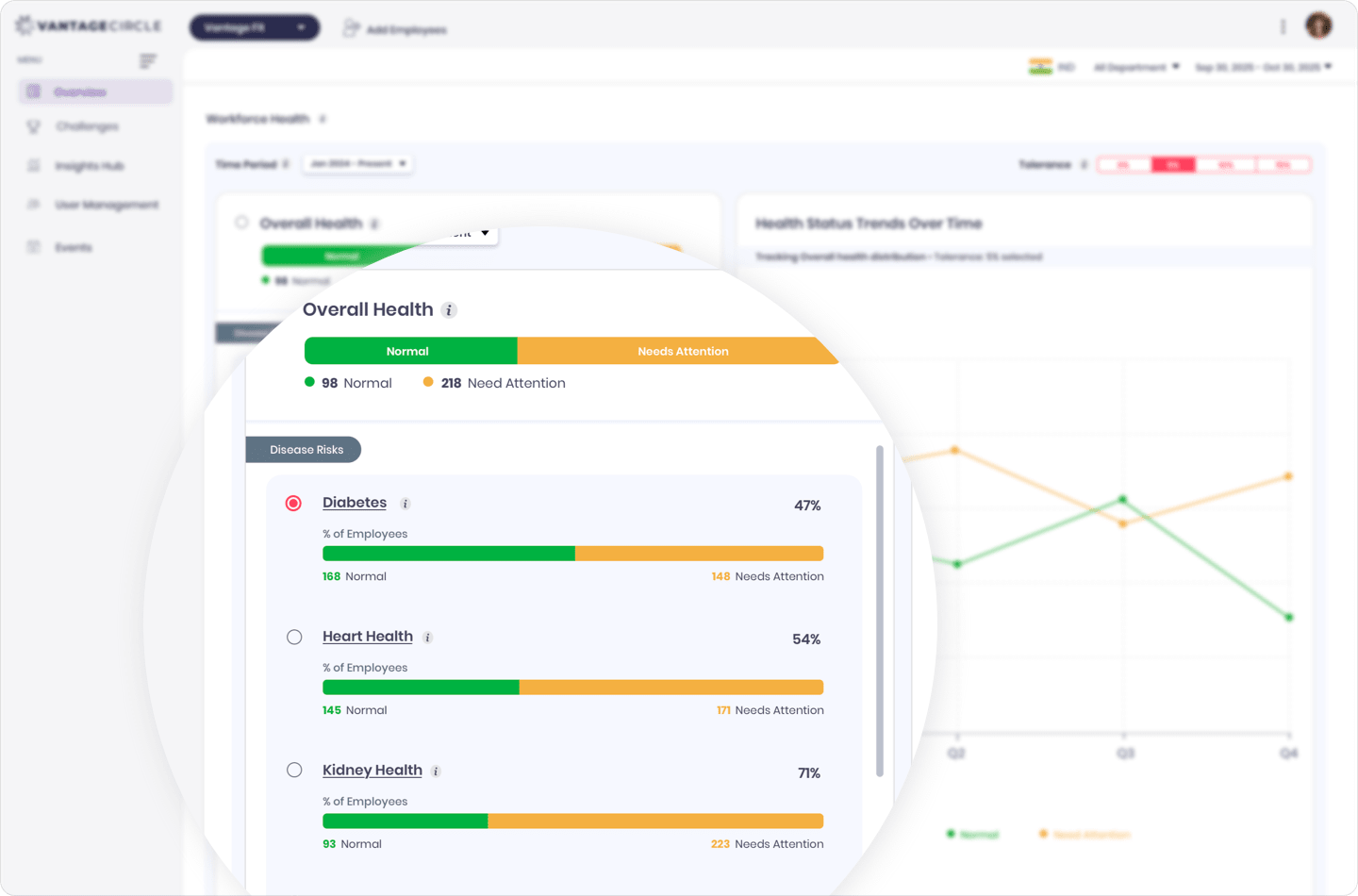
A wellness platform closes that loop. With Vantage Fit, employees complete a health risk assessment and can upload lab reports, and the app returns an AI health summary with personalized guidance.
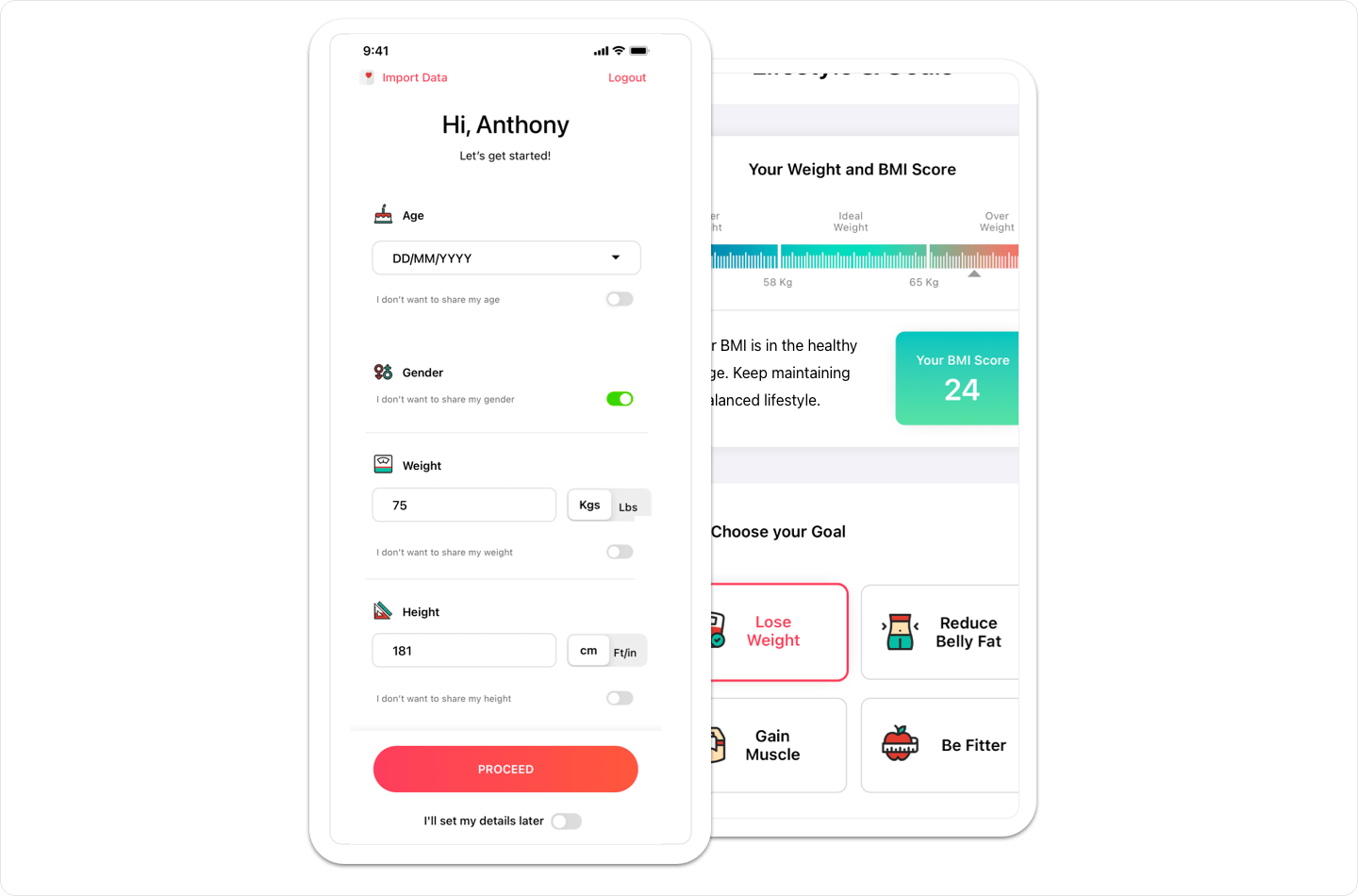
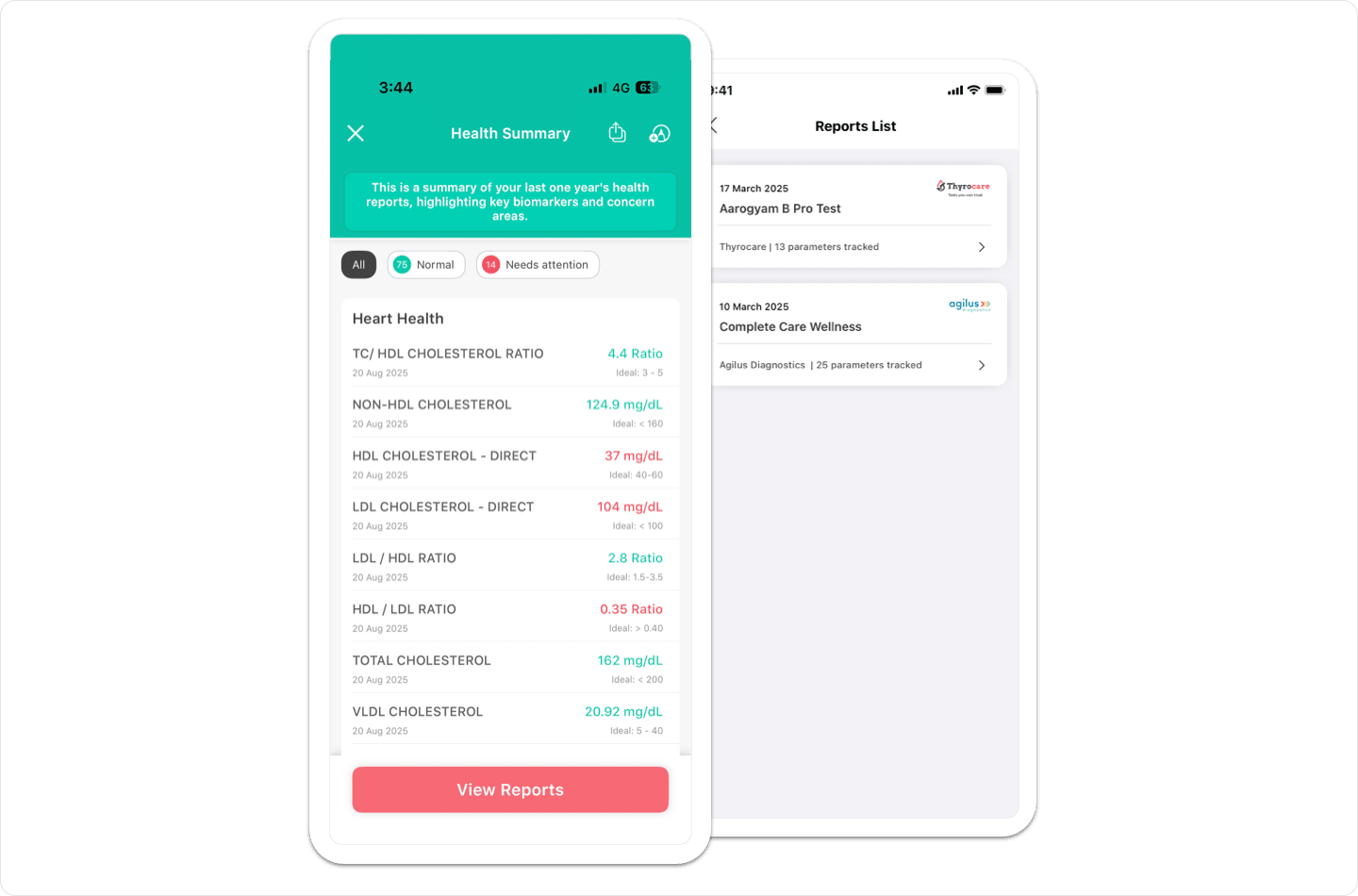
The privacy line matters here. HR sees only aggregated workforce trends through the biomarker dashboard, never any individual's health data. That makes it possible to spot risk patterns and target interventions without ever creating the surveillance problem that drives opt-outs.
In Tata Motors' Step & Stride Challenge, the program reached 59% engagement and an average organisational BMI of 24.
What are the most common health screening challenges?
Most screening programs stall on the same three problems: low participation, privacy concerns, and cost. Each has a practical fix, and none of them require a bigger budget. Participation responds to convenience and trust, privacy to clear data boundaries, and cost to scoping the panel to what you will actually act on. Solve these three and the rest is scheduling.

Low participation
Challenge: Employees skip screenings over privacy worries, fear of what the result might mean for their job, or simple disinterest.
Solution: Keep participation genuinely voluntary, communicate the benefit clearly before scheduling, and pair screenings with a rewards-linked wellness platform. Employees show up when there is value beyond the test itself.
"It's a great way to log activities. Employees are also rewarded with points, recognition and prizes."
Rachel Arthur, Director of Benefits & Wellness, Brazosport ISD
Data privacy
Challenge: Employees worry their personal health data could be misused or seen by their manager.
Solution: Use encrypted storage, document who can access what, and choose tools built for aggregate reporting. With Vantage Fit, HR and managers see only workforce-level trends, never any individual's results, which removes the single biggest reason people opt out.
Cost
Challenge: Screenings get expensive at scale, particularly full lab panels across a large workforce.
Solution: Negotiate bulk rates, fold costs into the health-insurance or wellness program budget, and start with a low-cost HRA to identify which panels are worth paying for. Weigh the cost against the absenteeism and claims cost of catching conditions late.
Suggested Read: The Essential Guide to Corporate Health Checkup and Health Fair Ideas for the Workplace.
Final thoughts
The gap screening closes is measurable. According to Evernorth, 32% of people at high risk for diabetes or cardiovascular disease had not had an A1C screening, and more than 25% had not had a lipid screening. These are people who already carry elevated risk and do not know their own numbers.
That is the case for writing screening into your employee health benefits and formalizing it in an employee health policy rather than running it as an annual event.
A screening detects issues sooner. A year-round program is what turns that early signal into a healthier, lower-cost workforce. Start with the screening, then build the program around it.
Frequently Asked Questions
What tests are included in employee health screening?
Most programs include a biometric core: blood pressure, height, weight, BMI, cholesterol, and blood glucose. Depending on the role, this may extend to vision and hearing tests, respiratory function, musculoskeletal assessment, mental health screening, or job-specific exams required by regulation.
What should I expect during an employee health screening?
Expect a short health questionnaire covering history and lifestyle, followed by biometric measurements such as blood pressure and BMI, and often a finger-prick or blood draw for cholesterol and glucose. Most screenings take 15 to 30 minutes. Some lab panels require fasting beforehand.
What should employees do with their screening results?
Review the results against the reference ranges provided, take any flagged reading to a doctor for proper evaluation, and use the rest as a baseline to track against next cycle. A screening result is a signal to investigate, not a diagnosis.
Is employee health screening mandatory or legal?
Health screening is legal, but in the US an employer-required medical exam must be job-related and consistent with business necessity under the ADA. Screenings offered through a wellness program are generally voluntary, so employees cannot be forced to take part or penalized for opting out. Confirm your specific obligations with qualified counsel.
What is the difference between a health screening and a health risk assessment?
A health risk assessment is a questionnaire capturing self-reported lifestyle, history, and habits. A screening adds objective measurement, such as biometric readings and lab tests. Most programs use both: the HRA for context, the screening for hard data.
Can my employer see my individual screening results?
No, not when the program is run correctly. The ADA and HIPAA restrict access to individual health data. With a compliant wellness platform, HR sees only aggregated, workforce-level trends, never any single employee's results.
How often should companies run health screenings?
Annually is the common cadence, and it aligns with most insurance cycles and gives a clean year-over-year comparison. Safety-critical roles with regulatory requirements may need more frequent testing. Screening more often than yearly rarely produces new signal for a general workforce.
How much does employee health screening cost?
Cost varies with the panel, the vendor, and whether screenings are on-site or at a clinic. A basic biometric screening sits well below a full lab panel. A low-cost health risk assessment run first will tell you which panels are worth funding, which is usually cheaper than screening everyone for everything.