
Happiness at work is a sustainable emotional state where employees feel purpose-driven, respected, and supported, allowing them to thrive both personally and professionally. It goes beyond a fleeting good mood or simple job satisfaction, encompassing a deeper sense of engagement, meaning, and connection to one's daily responsibilities and team.
Cultivating a positive work environment directly enhances workforce vitality. Research from the University of Warwick demonstrates that happy employees are up to 12% to 13% more productive, while feeling valued reduces burnout and boosts retention across teams.
Digital wellness platforms like Vantage Fit support workplace happiness by integrating daily mood logging, team wellness challenges, peer recognition, and a curated library of 30+ guided mindfulness sessions into a mobile experience that strengthens employee connection.
Key Takeaways
- Sustainable emotional state: True workplace happiness goes beyond short-term perks, creating long-term engagement, psychological safety, and purpose.
- Measurable business impact: Happy employees are roughly 12% to 13% more productive and drive 21% higher organizational profitability.
- Comprehensive well-being benefits: Prioritizing employee happiness lowers burnout risk by up to 32%, improves cardiovascular health, and reduces turnover.
- Systematic framework: Applying Martin Seligman's PERMA model addresses all key elements of workplace flourishing: positive emotion, engagement, relationships, meaning, and accomplishment.
The 4 core pillars of happiness at work

Workplace happiness does not mean artificial positivity or a stress-free environment. Instead, it relies on foundational organizational conditions that allow employees to navigate everyday challenges with resilience, mutual trust, and shared purpose.
In an interactive webinar, “Why Employee Happiness Matters, and What You Can Do to Build a Better Workplace”, Harvard experts Michael McCarthy and Tessa Misiaszek highlighted two essential reflective questions:
- If you could eliminate an aspect of your work to make you happier, what would it be?
- If you could create a new aspect of your work to make you happier, what would it be?
These questions cut straight to what so many employees ponder but rarely voice: what truly sustains a person at work?
As author Ann Brashares observed, "Being happy isn't having everything in your life be perfect. Maybe it's about stringing together all the little things."
Emiliana R. Simon-Thomas and Dacher Keltner, in their research at UC Berkeley's Greater Good Science Center, outline four foundational pillars that sustain positive employee experiences:
- Purpose and Meaning: Knowing that one’s daily work contributes to something larger, serving colleagues, clients, and the community.
- Positive Relationships: Fostering mutual respect and psychological trust across team members and leaders.
- Resilience and Agency: Having the autonomy and support needed to bounce back gracefully from setbacks.
- Engagement and Flow: Experiencing deep involvement in tasks where employees can apply their strengths freely.
To structure these pillars systematically across organizations, leaders frequently apply the PERMA model, developed by positive psychology pioneer Martin Seligman. The PERMA model defines five actionable building blocks for workplace flourishing:

| PERMA Pillar | Core Definition | Workplace Application |
|---|---|---|
| P - Positive Emotion | Experiencing joy, gratitude, contentment, and hope | Celebrating team wins, gratitude breaks, daily mood check-ins |
| E - Engagement | Being deeply absorbed in tasks and entering a state of 'flow' | Aligning strengths with projects, minimizing disruptive meetings |
| R - Relationships | Forming supportive, meaningful social connections with others | Team challenges, peer recognition feeds, buddy mentoring |
| M - Meaning | Belonging to and serving a cause larger than oneself | Connecting daily milestones to company mission and social impact |
| A - Accomplishment | Striving for goals, building mastery, and achieving tangible results | Clear milestone tracking, professional growth paths, reward points |
How happy workplaces impact employee well-being
Creating a happy work environment improves employee physical health, reduces burnout rates, fosters creativity, and strengthens team loyalty across the organization. Investing in positive workplace culture transforms individual mental well-being into measurable organizational resilience and performance gains.
Below are seven research-backed ways workplace happiness transforms employee well-being and business health:
1. Reduces stress and burnout

Chronic workplace stress remains one of the primary drivers of employee fatigue and turnover. People need connection, purpose, and psychological safety to thrive under pressure.
When employees feel supported and safe expressing concerns, cortisol spikes decrease and team members manage stressors constructively.
Suggested Read: Managing Stress: Insights from Mental Health Experts
Research from the American Psychological Association indicates that employees who feel valued report significantly lower stress levels and stronger cognitive resilience during demanding work cycles.
2. Improves physical and mental health

The daily demands of modern work frequently leave little room for intentional self-care. When coupled with an unsupportive workplace culture, physical and emotional well-being quickly deteriorate.
Happiness is the highest form of health.
– Dalai Lama
A clinical study in Current Psychology found that happier employees are up to 32% less likely to experience burnout compared to dissatisfied peers.
Furthermore, medical research highlighted by Positive Psychology indicates that employees with higher life satisfaction exhibit lower resting heart rates, healthier blood pressure, and stronger immune response, substantially mitigating long-term cardiovascular risks.
Good health is one of the strongest predictors of subjective well-being. According to the World Happiness Report, physical vitality and accessible health support correlate directly with high workplace happiness scores.
3. Fosters a sense of purpose and meaning

A central component of happiness at work is knowing that one's daily contributions make a tangible difference. When team members understand the impact of their work, it fuels long-term motivation and job satisfaction.
Surveys show that approximately 60% of employees consider the ability to do what they do best every day as a critical factor in job satisfaction. Purpose elevates routine responsibilities into sources of pride and personal accomplishment.
Author Arthur C. Brooks, in his research on subjective well-being, highlights three reflective questions to distinguish fleeting enjoyment from lasting purpose:
- Do I experience true enjoyment, or am I merely chasing fleeting pleasures?
- Am I focused on managing my wants, or am I finding satisfaction in what I already have?
- Have I found enough meaning and purpose in my daily work?
Neha Pant Tewari, a certified Happiness Coach and NLP practitioner, underscores this balance between professional milestones and personal alignment:
"Pursue happiness and success independently of each other. Chasing success for the sake of success does not guarantee happiness. Until you align your pursuits with your values, talents, and purpose, a sense of fulfilment will continue to elude you."
– Neha Pant Tewari, Happiness Coach
4. Increases employee productivity

A positive workplace atmosphere directly elevates daily output. When team members feel supported by leadership and appreciated by peers, productivity becomes an organic result of positive energy and high morale.
A landmark study by the University of Oxford found that happy workers are 13% more productive. When employees enjoy their working environment, they work faster, make fewer errors, and stay focused on core objectives.
5. Uplifts workplace creativity and innovation
Mood directly influences cognitive flexibility. Extensive meta-analyses on positive psychology confirm that experiencing positive emotions expands an individual's awareness and sparks innovative problem-solving.
When team members feel secure and respected, they share novel ideas freely without fear of harsh criticism.
Psychologist Mihaly Csikszentmihalyi identified creative expression as a vital source of meaning and psychological vitality, noting that workplaces encouraging creativity unlock higher employee enthusiasm.
6. Improves customer satisfaction and loyalty
Employee satisfaction directly mirrors customer experience. Frontline team members who feel supported and valued in their roles deliver warmer, more attentive service, strengthening customer relationships.
According to a benchmark study by the Aberdeen Group, organizations with formal employee engagement initiatives achieved a 233% increase in customer loyalty.
"Companies with formal employee engagement programs enjoy the fruits of their labor in fostering an environment where employees are genuinely motivated to satisfy clients."
– Aberdeen Group
Similarly, Glassdoor research revealed that every 1-star improvement in an employer's company rating corresponds to a 1.3-star increase in customer satisfaction scores.
7. Boosts employee retention and loyalty

Happy employees are far less likely to seek opportunities elsewhere, mitigating the substantial administrative and recruitment costs associated with employee turnover.
Industry data confirms that dissatisfied employees are four times more likely to leave their jobs than satisfied colleagues. Fostering a supportive workplace protects institutional knowledge and maintains team continuity.
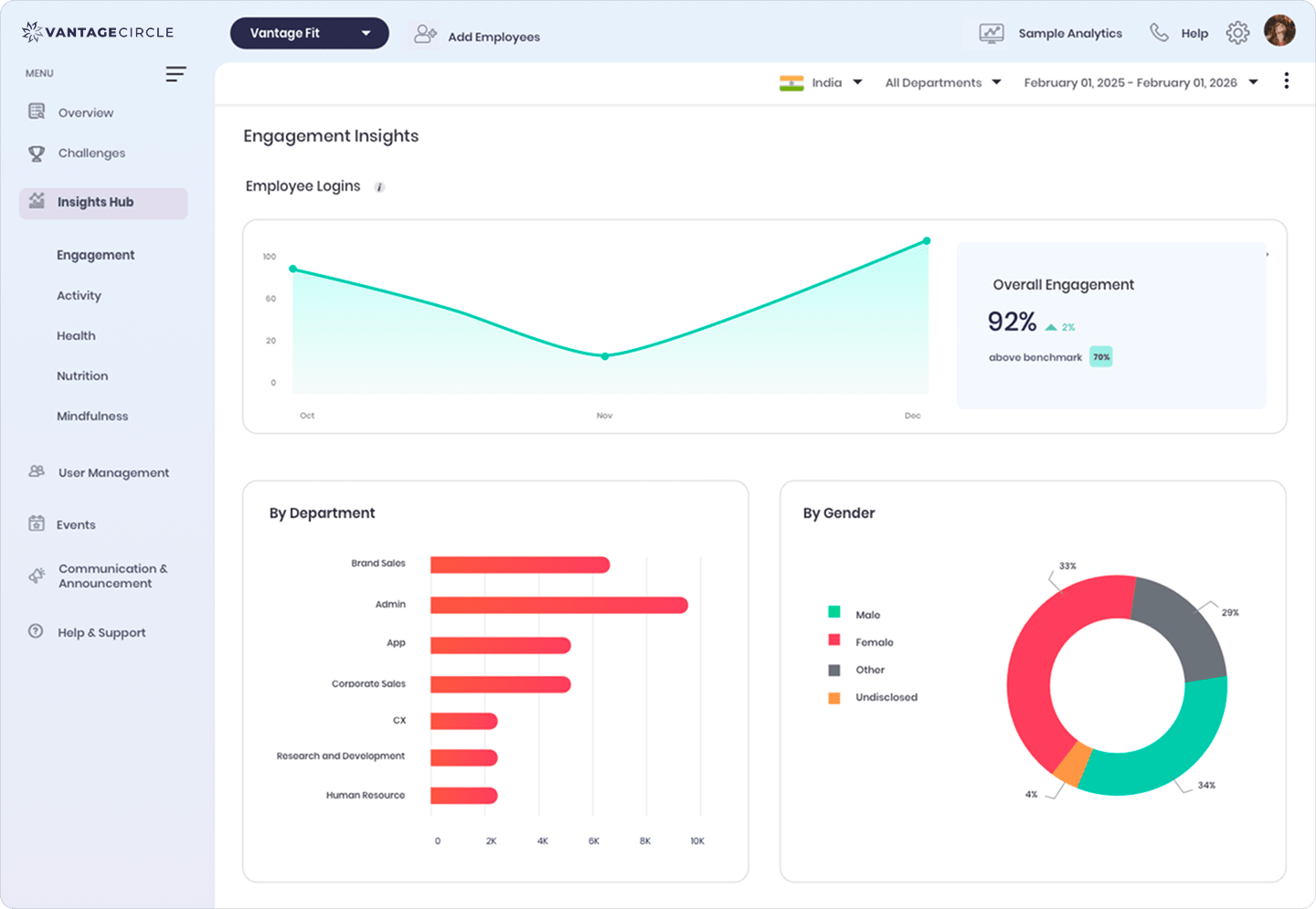
Organizations cultivate this connection by integrating shared wellness rituals into the workweek. Platforms like Vantage Fit support organizational well-being by combining department-level team challenges, configurable reward points, peer social feeds, and an individual Wellness Score that dynamically tracks employee engagement and activity improvements over time.
Happy employees are key to business success
Fostering employee happiness produces measurable financial returns, including higher profit margins, lower turnover expenses, and stronger market competitiveness. Organizations that prioritize employee satisfaction consistently outperform competitors across key operational benchmarks.

Key enterprise studies validate the economic impact of workforce happiness:
- Gallup Workplace Research: Companies with top-quartile employee engagement experience a 21% increase in profitability and 17% higher productivity.
- Harvard Business Review: Organizations with happy workforces outperform industry competitors by up to 20% in overall commercial performance.
- Warwick Economics: Productive output increases by 12% in environments where positive employee sentiment is prioritized.
How to create a happy workplace: 8 proven strategies
Creating a happy workplace requires intentional leadership practices, transparent communication channels, schedule flexibility, and structured wellness initiatives. Implementing structured positive habits creates an inclusive atmosphere where employees feel valued and motivated to contribute their best work.
1. Cultivate a psychologically safe environment

Psychological safety allows employees to voice questions, share creative suggestions, and report challenges without fear of humiliation or retaliation. Research in the Annual Review of Organizational Psychology shows that teams with high psychological safety exhibit higher mutual assistance and proactive feedback-seeking.
Positive psychology researcher Dr. Barbara Fredrickson found that opening team meetings with brief moments of gratitude broadens cognitive awareness and builds positive emotional momentum. Her broaden-and-build research demonstrates that positive emotional states enhance problem-solving capacities.
2. Offer flexibility and autonomy
Modern employees value autonomy over rigid working arrangements. Providing schedule flexibility empowers team members to structure work around their peak productivity hours while managing personal responsibilities effectively.
A report by the International Labor Organization highlighted that flexible work arrangements support superior work-life balance and sustained output.
Companies like LinkedIn redesigned their Silicon Valley facilities specifically around dynamic hybrid schedules, emphasizing trust and task completion rather than physical desk presence.
3. Integrate kindness and empathetic leadership

Genuine empathy forms the bedrock of employee trust. When a team member experiences performance dips, empathetic leaders reach out proactively to offer support rather than punitive critiques.
Simple supportive check-ins build trust and establish a healthier work environment. An Ernst & Young Empathy Survey highlighted the top qualities employees desire in empathetic leadership:
- Openness and transparency (41%)
- Fairness in decision-making (37%)
- Following through on stated commitments (37%)
- Encouraging employees to voice opinions freely (36%)
- Trustworthiness during challenging discussions (34%)
4. Invest in employee growth and skill development
Clear career progression and continuous learning opportunities prevent professional stagnation and sustain engagement.
Key investment areas include:
- Training and development: Sponsoring technical certifications, skill workshops, and leadership development programs.
- Internal career mobility: Establishing transparent promotion pathways and cross-departmental project opportunities.
- Meaningful task alignment: Delegating challenging yet achievable responsibilities that build mastery.
5. Give your employees a clear sense of purpose
Employees thrive when they recognize how their daily efforts contribute to broader organizational missions and societal value.
"Happiness comes from progress. Progress shows up in the form of growth and in a sense of contribution."
– Tony Robbins
Practical ways to embed purpose into team culture:
- Frequently communicate the organizational vision and celebrate how team projects advance strategic goals.
- Connect employee milestones to customer outcomes and corporate social responsibility initiatives.
- Help team members identify how their individual strengths align with collective objectives.
6. Foster belongingness and inclusivity

With individuals spending approximately 90,000 hours at work over a lifetime, feeling welcomed and connected is vital for psychological health.
Gallup research indicates that having strong workplace friendships significantly increases employee satisfaction, team advocacy, and retention. O.C. Tanner's Global Culture Report reinforces that organizations with high community index scores experience a 62% increase in employee tenure.
Effective belonging initiatives include:
- Designing inclusive workplace policies that welcome diverse backgrounds and working styles.
- Organizing engaging social wellness activities that encourage cross-functional connection.
- Celebrating both minor daily wins and major professional milestones publicly.
During a company-wide wellness campaign at the International School of Kuala Lumpur (ISKL), program coordinators observed how shared challenges strengthened team bonds:
"Colleagues also developed friendships because of the camaraderie of the Vantage Fit teams."
– International School of Kuala Lumpur (ISKL)
7. Practice transparent, positive leadership

Workplace morale reflects leadership behavior. When managers model positive attitudes and transparent communication, employees feel comfortable innovating and taking calculated risks.
Adopting the H.O.T. communication model (Honest, Open, Transparent) ensures team members stay informed and valued. For organizations establishing structured management habits, exploring proven wellness leadership strategies provides a dependable foundation.
8. Prioritize employee well-being with a comprehensive wellness program
Structured wellness programs reinforce healthy lifestyles and demonstrate tangible organizational commitment to employee happiness.
Actionable components include:
- Ensuring comfortable, ergonomic, and clean physical workspaces.
- Providing resources for stress reduction, yoga, and healthy habits.
- Deploying corporate wellness programs that combine physical fitness tracking, mental wellness sessions, and social engagement.
Frequently Asked Questions
What does happiness at work mean?
Happiness at work refers to an employee's overall sense of enjoyment, psychological safety, and purpose in their professional role. It involves feeling valued by peers and leadership, handling workplace challenges resiliently, and maintaining healthy social connections across the organization.
Why is employee happiness important for business performance?
Employee happiness directly boosts productivity by 12% to 13%, elevates profitability by 21%, and reduces burnout by up to 32%. Happy employees provide better customer service, collaborate more effectively, and stay with organizations longer, lowering recruitment and turnover costs.
What is the PERMA model of workplace happiness?
Developed by psychologist Martin Seligman, the PERMA model outlines five core pillars of well-being: Positive Emotion, Engagement, Relationships, Meaning, and Accomplishment. Applying these five elements helps leaders build comprehensive workplace cultures that support psychological flourishing.
How can leaders foster happiness in remote and hybrid teams?
Leaders can support remote and hybrid employee happiness by offering flexible working hours, scheduling regular virtual check-ins, recognizing contributions publicly on team channels, and deploying digital wellness platforms for team challenges and shared activities.
How do digital wellness platforms support workplace happiness?
Digital wellness platforms like Vantage Fit support happiness by offering daily mood tracking, social feeds for peer recognition, gamified team fitness challenges, and on-demand mindfulness and meditation sessions that help employees manage stress proactively.
Summing it up
Happiness is less about external circumstances and more about cultivating positive internal habits and supportive working environments. While individuals navigate complex emotional landscapes, employers play a transformative role in creating conditions where team members thrive.
When organizations prioritize employee well-being through psychological safety, empathetic leadership, and comprehensive wellness initiatives, the benefits reflect in both workplace joy and sustainable business growth.