
Helping an employee recover from burnout starts with changing their working conditions, not their coping skills. Cut the workload, protect their off-hours, and give them a clear path back. Gallup found burned-out employees are 74% more likely to be looking for another job, so the cost of waiting is turnover.
The harder part is spotting who is at risk before they hand in notice. That is where aggregate wellness data earns its place, whether from Vantage Fit or any platform that reports participation and mood check-in trends by team.
Key Takeaways
- Burnout is a workplace condition, not a personal failing. The World Health Organization classifies it as an occupational phenomenon caused by chronic workplace stress that has not been managed.
- Employers control the levers that matter most: workload, deadlines, off-hours boundaries, and whether asking for help feels safe.
- Remote burnout and office burnout need different fixes. Office burnout usually traces back to workload and colleagues. Remote burnout usually traces back to isolation and blurred boundaries.
- Gallup found burned-out employees are 63% more likely to take a sick day and 13% less confident in their own performance.
- A 30-day reset can interrupt the pattern. Full recovery takes longer, and it only holds if the root causes change.
What is employee burnout?
Burnout is a state of total mental, physical, and emotional exhaustion caused by chronic workplace stress. It builds slowly. An employee loses motivation first, then energy, then interest in work they used to care about. By the time it is obvious, it has usually been building for months. This guide is about helping one person recover. For the organization-wide picture, including causes and early warning signs across a whole workforce, see our fuller guide to employee burnout.
Because the cause sits in the working conditions, that is where the fix sits too. This is what separates burnout from ordinary stress in HR terms. You cannot resolve it by asking someone to build more resilience, only by changing what is draining them.
Three symptoms define it:
- Exhaustion. The employee is drained. Small tasks feel heavy. Rest does not seem to help.
- Cynicism. They pull back from the work and the team. Tone shifts. Feedback lands badly.
- Reduced efficacy. They doubt their own competence. Focus slips and output quality drops.
It is not spread evenly across a workforce. Reporting Asana's study of 10,000 knowledge workers across seven countries, Forbes noted in 2023 that 84% of Generation Z, 74% of Millennials, and 47% of Baby Boomers said they were burned out.
The backdrop is a workforce already under strain. Gallup's State of the Global Workplace: 2026 Report found 40% of employees globally experienced a lot of stress the previous day.
How can employers help employees recover from burnout?
Recovery is not something you can delegate to the person who is burned out. They have the least capacity to fix it. The American Psychological Association surveyed 1,501 US workers for its 2021 Work and Well-being Survey and found 79% had experienced work-related stress in the month before they were asked. At that scale, this is a design problem, not a set of individual cases.
Five things an employer can actually change:
1. Make it safe to say it out loud
Most employees will not raise burnout if they think it reads as weakness. Open the door explicitly. Ask direct questions in one-to-ones, and keep those conversations separate from performance reviews. If the first person to admit they are struggling gets a worse rating, nobody else will speak up.
2. Cut the workload before anything else
This is the one that moves the needle. Audit what the person is carrying, then remove or defer the non-critical parts. Look hard at deadlines and overtime. No amount of wellness support offsets a workload nobody could sustain.
3. Protect time off, and make people take it
Unused leave is a warning sign, not a badge. Push people to book it. More importantly, make sure they can disconnect while they are gone, which means someone covers the work and nobody messages them.
4. Fund support people will actually use
Counselling, wellness programs, and workshops help people build a healthy lifestyle, but only if employees know they exist and can reach them in a few clicks. A well-signposted basic benefit gets used more than a rich one nobody can find.
5. Offer a path forward, not just relief
Burnout often comes with a sense of being stuck. Learning and development opportunities give people something to move toward, which lifts both job satisfaction and retention.
Remote work burnout vs. office burnout: what's different?
Burnout hits remote, hybrid, and in-office employees alike, but the causes usually differ. Knowing which one you are dealing with tells you which intervention will work. Office culture changes will not solve what is really an isolation problem. Hybrid teams tend to get both sets of triggers at once, which is why a single policy rarely covers everyone.
| Factor | Office burnout | Remote work burnout |
|---|---|---|
| Primary trigger | Workload overload, difficult colleagues, commute stress | Boundary blur, isolation, always-on culture |
| Visibility to managers | Higher, because physical proximity makes fatigue easier to spot | Lower, because video calls mask emotional state |
| Social buffer | Natural in-office interaction provides daily relief | Takes deliberate effort, and isolation compounds stress |
| Recovery signal | Physical separation from the workspace after hours | Hard to leave work when home is the office |
| Common symptom | Resentment toward colleagues or the workplace | Loneliness, detachment, inability to disconnect |
| What works | Workload audits, team culture changes, commute relief | Off-hours policies, virtual community, structured wellness programs |
For a remote employee, the pattern is usually the same. Boundaries blur, so hours stretch and switching off gets harder. Isolation sets in without the incidental contact an office provides. Structure disappears, and so does the sense of getting anything finished. Each one feeds the next, and that chain is what people mean by work from home burnout.
How does technology contribute to work-from-home burnout?
Remote employees can feel unseen. Cut off from the daily noise of an office, some overwork to prove they are working at all. The tools meant to close that gap often widen it. Constant instant messaging, email pings, and an always-on expectation are themselves a source of burnout.
Three fixes that address the technology side directly:
Reduce meeting fatigue by streamlining communication
Video call fatigue, often called Zoom fatigue, is its own drain, and the interruptions break up any chance of focused work. Before scheduling anything, check the agenda. Is the meeting necessary? Does everyone invited need to be there? Cut the optional attendees. Keep group emails short and send them only to the people who need them. Push status updates into a project tool so they stop arriving as chat. Left alone, this turns into broader work fatigue that costs both focus and resilience.
Set strict off-hours and enforce them
Some employees will work all hours without being asked to. They will trade sleep for output, and the damage shows up later as anxiety. Set protected off-hours inside the working day and hold the line on them. Ban work email and official activity during those windows. The rule only works if managers follow it too, so no after-hours messages from leadership.
Build a virtual community
The coffee-break conversations that used to happen by accident now have to be scheduled. Those small interactions were doing real work. Without them, concerns go unvoiced, small frustrations grow, and morale drifts down. Isolation is the trigger most easily missed, because nothing about it shows up in someone's output until it is severe. Practical options include live-streamed fitness classes, virtual team-building, meditation sessions, a channel for casual chat, and discussion boards for peer support.
For teams spread across time zones, virtual wellness programs give people a shared routine and something to talk about that is not work. If you are choosing tooling for a distributed team, our roundup of wellbeing platforms for remote employees compares the main options.
A Vantage Fit podcast guest who led a distributed workforce described the mechanism plainly:
"It's a negative cycle. Work stress leads to low engagement, and if you're not engaged, you're more stressed. The consequence of that cycle is burnout — when you get frozen and can't solve anything."
— Tatiana Cirio, VP of People, Rocket.Chat | Listen to the full episode
The remote and work-from-home sections in this guide build on earlier reporting by Neha Yasmin.
The 30-day workplace reset
Recovery takes time, consistency, and workplace support. This four-week plan gives HR teams and managers a practical way to help employees regain energy and rebuild healthy habits.
Week 1: assess and listen
- Ask people directly. Have employees rate their energy, workload, and stress. A three-question check-in surfaces what a performance review misses.
- Run a pulse survey. Find the burnout hotspots by team or role, and keep the baseline to compare against later.
- Hold wellbeing check-ins. Managers book 1:1s to listen, kept separate from performance talk.
- Audit workloads. Defer non-critical work now. Nobody recovers while the conditions stay the same.
Week 2: reset daily habits
- Build movement into the day. Short activity breaks between meetings beat one big intervention. A no-equipment routine like Vantage Fit's 7-Minute Workout fits in a lunch break.
- Protect focus time. Two meeting-free blocks a week, minimum.
- Create a hard stop. People log off at a consistent time. No after-hours messages unless something is genuinely urgent.
- Make rest visible. Leaders take their own lunch breaks and PTO where people can see it.
Week 3: rebuild connection
- Recognize work as it happens. Acknowledge effort during a project, not only at delivery. A mention in a team meeting signals the person is valued, not just the output.
- Run a team challenge. A shared wellness challenge combining steps, hydration, and movement gives people something in common, with participation light enough for anyone still recovering.
- Encourage peer appreciation. A small recurring ritual is enough to normalize it.
- Signpost mental health resources. People use what they can find.
Week 4: make it stick
- Re-run the pulse survey. Compare against Week 1. Share the findings.
- Review participation data. Vantage Fit's dashboard shows engagement and challenge participation by department, which gives HR something specific to raise with managers instead of a general impression.
- Fix the root causes. If the month surfaced excessive workloads, unclear expectations, or an always-on culture, tackle those. Wellness activities do not offset systemic problems.
- Plan the next quarter. Burnout prevention is ongoing, not a campaign.
Thirty days will not complete a recovery. It is enough to interrupt the pattern, rebuild some trust, and close the gap between employees and the support they can actually reach.
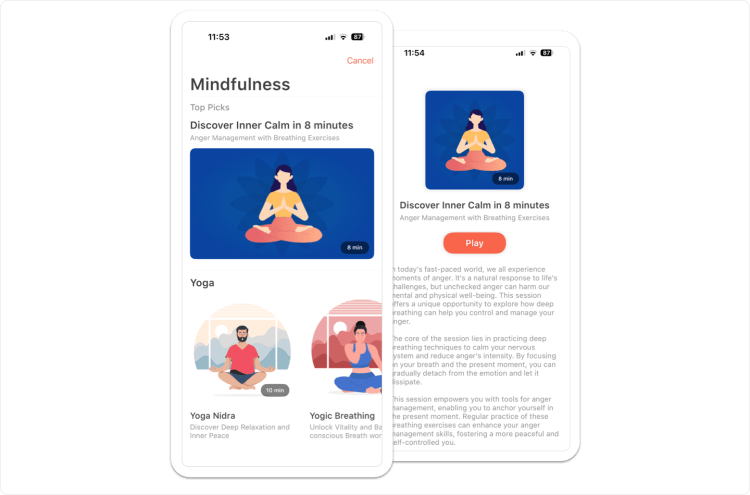
IBS Software's 28-day March to Fitness challenge, run on Vantage Fit, shows what participation looks like when the format works. Of more than 500 participants, 130 tracked their daily mood and 95 took part in mental wellness activities, contributing to an overall engagement rate of 88%.
What can employees do to recover from burnout?
Employees are not powerless. But none of the following works on its own if the workload, the deadlines, and the off-hours boundaries have not been fixed first. Five that make a difference:
- Name it early. Track the signs: chronic exhaustion, falling productivity, rising cynicism. Recognizing burnout before it is total makes recovery much shorter.
- Say no when it counts. Before agreeing to something, ask whether it costs you the things that matter more. Declining excessive demands is how boundaries get built.
- Ask for help. Talk to colleagues, friends, or a therapist. Delegate. Share the load rather than absorbing it quietly.
- Build in daily recovery. Sleep, movement, and mindfulness are the basics, and self-care works better as a routine than a rescue. Pair that with stress management activities like breathing or journaling, or a productive hobby that pulls your attention elsewhere.
- Come back gradually. Restart with manageable work and build up. Going straight back to full load is how people relapse.
Connection during recovery is not a soft factor. Writing in the Academy of Management Review, Heaphy and Dutton (2008) found that positive social interactions at work "bolster physiological resourcefulness" by strengthening the cardiovascular, immune, and neuroendocrine systems.
Listen to: Integrating Breathwork As A Wellness Strategy At The Workplace by Ed Harrold
Frequently asked questions
How do you help an employee who is experiencing burn out?
Start with a private, non-evaluative conversation to understand what is causing it. Then change the conditions: reduce or defer their workload, protect their off-hours, and confirm someone covers the work while they take leave. Point them to counselling or wellness support, and agree a gradual return rather than an immediate full load.
What is burnout?
It is chronic workplace stress that has not been managed, and the World Health Organization classifies it as an occupational phenomenon rather than a medical condition. It is not the same as ordinary stress, which comes and goes, and it is not clinical depression, though the American Psychological Association links untreated burnout to anxiety, depression, and substance abuse.
What are common signs of employee burnout?
Exhaustion that rest does not fix, falling performance, emotional detachment from work and colleagues, increased irritability, and physical symptoms such as headaches or disturbed sleep. In remote employees, watch for withdrawal from optional calls and messages sent at unusual hours.
How long does it take to recover from burnout?
It varies widely, from a few months to a couple of years in severe cases. A structured 30-day reset can interrupt the pattern and rebuild some habits, but it is not a full recovery. Recovery only holds if the workload and culture that caused it change too.
What are the long-term effects of untreated burnout?
Chronic physical and mental health problems, lower job satisfaction, strained relationships, and sustained drops in productivity. For the employer, it shows up as absenteeism and turnover: Gallup found burned-out employees are 63% more likely to take a sick day and 74% more likely to be looking for another job.
How can organizations prevent employee burnout?
Review workloads and deadlines regularly, keep expectations realistic, and make time off genuinely usable. Offer stress management and resilience training, keep mental health resources easy to find, and train managers to spot the early signs. For remote teams, add explicit off-hours policies and deliberate social contact.
Bottom line
Burnout recovery is not a fast process, and it is not the employee's project alone. The employer sets the workload, the deadlines, and whether it is safe to admit you are struggling. Those are the levers that decide whether someone recovers or leaves.
If you are building this into a corporate wellness program, start with what makes recovery visible: regular check-ins, protected rest, and consistent movement. For managers, a supportive work environment remains the most effective long-term prevention there is.