
A wellness room at work is a private, quiet room set aside for employees to rest, meditate, stretch, pump breast milk, or step away from noise. It is not a meeting room and not a breakout space. Its only job is recovery.
The need for one is not subtle. Gallup's State of the Global Workplace 2026 report found that 40% of employees experienced stress a lot of the previous day. A room people can genuinely retreat to is one of the cheapest structural answers available to an HR team, and a platform like Vantage Fit is what makes the habits that happen inside it visible and trackable rather than anecdotal.
For nursing employees, the room is more than a benefit. In the United States it is a legal requirement, and most employers are already covered by it whether or not they have built the space.
KEY TAKEAWAYS
- A wellness room is a private space for recovery: meditation, napping, stretching, or pumping breast milk. Meetings and calls do not belong in it.
- Under the Fair Labor Standards Act, a space to pump breast milk is a legal obligation for most US employers, not a perk. It cannot be a bathroom.
- Dedicated wellness space is still rare enough to be a differentiator: HR.com's Future of Employee Well-being 2025 found only 26% of organizations offer wellness areas and 21% offer quiet zones.
- The room fails on policy far more often than on design. Decide booking rules, time limits, and manager expectations before you open the door.
What is a Wellness Room at Work?
A wellness room at work is a private space where employees can do things that support their mental and physical health during the working day.
It is not a breakroom or a spare conference room. It is a quiet, versatile space set up for a narrow set of uses: meditation, nursing, yoga, or a short escape from the noise of an open-plan floor.
Companies that provide one are usually the ones already investing in employee health and treating a stress-free zone as infrastructure rather than decoration.
The room serves a nursing parent pumping breast milk, an employee doing breathing exercises between calls, and someone stretching out a stiff back at 4pm. All three uses are legitimate, and all three are difficult to do anywhere else in a modern office.
One thing to be clear about with your teams from day one: wellness rooms are not for standard office activities like meetings or phone calls. The moment the room becomes bookable as overflow meeting space, it stops functioning as a wellness room. Protecting that boundary is a policy decision, and it is covered further down.
Why Does Your Office Need a Wellness Room?

Most of the return on a wellness room shows up in things HR already measures: retention, engagement scores, absence, and the quality of exit-interview feedback. Here is what the room actually does for a workforce.
- Boosts Job Satisfaction
When a company gives up floor space for employee health, employees read it as a signal. A wellness room is a visible, physical commitment rather than a line in a benefits deck, and that visibility is most of why it lands. It is a small capital decision with a disproportionate effect on morale.
- Encourages Physical Health
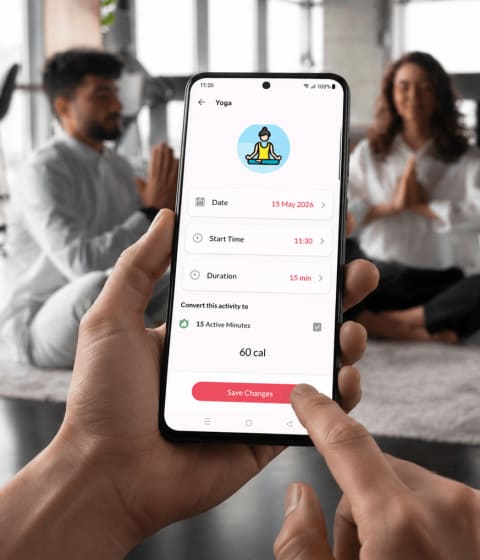
A wellness room is not only about stillness. It gives people somewhere to move, whether that is a yoga and stretching room or simply a space to get away from a desk.
Regular stretching or a short yoga session improves posture, reduces the aches that come with eight hours in a chair, and returns people to their desks with more energy. That feeds directly into the physical health measures most wellness programs are already reporting on.
- Provides a Private Space for Nursing Mothers

Nursing employees need a private space to nurse or pump breast milk during work hours. A dedicated lactation room removes a daily source of stress for returning parents and makes the return-to-work transition survivable rather than something people quietly resign over.
This is also the one use case with legal weight behind it, which is why it gets its own section below.
- Increases Productivity
Recovery is not the opposite of output. Employees who can take fifteen minutes in a quiet room come back able to concentrate, which matters more than the fifteen minutes cost you in desk time.
- Enhances the Work Environment
A wellness room sets a tone. It tells people that stepping away is permitted, which is the difference between a workforce that recovers on site and one that hides in a stairwell or a car park. It also gives managers a concrete thing to point at when they talk about balance.
- Improves Mental Health

On the days when stress tips into something harder to manage, a short break in a private space makes a measurable difference. A wellness room gives employees somewhere to do the things that actually help, such as meditation or a few minutes of guided breathing, without doing it at their desk in front of colleagues.
- Helps with Employee Retention
Wellness rooms show up in the reasons people give for staying. The room signals that the employer will spend real money on employee health, and that signal is hard to fake in a benefits brochure.
Now that the case is clear, there are two things to settle before you build: what the law requires, and what your usage policy will say.
What HR Needs to Get Right Before Opening a Wellness Room
Most wellness rooms do not fail on design. They fail because nobody decided who the room is for, who can book it, and what happens when a manager objects. Three things are worth settling first.
The lactation room is a legal requirement, not a perk
Under the Fair Labor Standards Act, as amended by the PUMP Act, most employers in the United States must provide nursing employees with reasonable break time and a private space to pump breast milk, for one year after the child's birth.
The space itself has to meet specific conditions. According to the Department of Labor's Fact Sheet #73A, it must be functional for pumping, shielded from view, free from intrusion, available when the employee needs it, and it cannot be a bathroom. At minimum it needs somewhere to sit and a flat surface other than the floor to put the pump on.
Two details regularly surprise HR teams:
A permanent dedicated room is not required. The law asks for a space that meets the conditions when it is needed. Larger employers often choose a dedicated room on each floor, but a reliably available private space also satisfies the obligation. This matters if your objection to a wellness room has been square footage.
The small-employer exemption is narrower than people assume. Employers with fewer than 50 employees are exempt from the break time and space requirements only where they can demonstrate that compliance would be an undue hardship by causing significant difficulty or expense, judged against the size, financial resources, nature, or structure of the business. All employees across all worksites count toward that headcount, and the exemption is not available at all to employers with 50 or more employees. The Department of Labor's Fact Sheet #73 sets out the full obligation.
If your organization operates outside the US, treat this as the floor rather than the ceiling, and check your local requirements before you finalize the room's specification.
Write the usage policy before you open the door
The most common failure is a beautiful room that gets colonized as meeting overflow within a month. A short written policy prevents it. Cover four things:
Booking. Decide whether the room is first come, first served or bookable, and put it in the same system people already use for desks and rooms. If it is bookable, block it from appearing in general meeting-room searches.
Time limits. Set a norm rather than a rule where you can. Fifteen to thirty minutes covers most uses, and lactation breaks should be explicitly exempt from any cap.
Priority of use. State plainly that lactation use takes precedence, because that is the use with a legal basis. Everything else queues behind it.
Manager expectations. This is the part that decides whether the room gets used. If people believe that walking into the wellness room will be noticed and counted, they will not go. Holistic wellness practitioner Sindhujaa Kumar made the point directly on the Vantage Fit podcast:
"Allow people to be human instead of machines. Look at a person's work, is it satisfactory, are targets being met? Then hours worked and breaks taken shouldn't really matter."
— Sindhujaa Kumar, Holistic Wellness Practitioner | Listen to the full episode
Putting that expectation in writing, and having a senior leader restate it, does more for utilization than any amount of soft furnishing.
Making the case to leadership
Two arguments work better than a general appeal to wellbeing.
The first is scarcity. HR.com's Future of Employee Well-being 2025 research found that only 26% of organizations offer wellness areas and 21% offer quiet zones, against 58% for ergonomic equipment and 49% for social spaces. Most employers have covered the ergonomic basics, which makes recovery space one of the few remaining differentiators, and the kind of thing candidates notice on a site visit.
The second is demand. If 40% of employees globally report significant stress on any given day, per Gallup's 2026 data, the question is not whether people need somewhere to decompress but where they are currently doing it. Usually the answer is a toilet cubicle, a parked car, or nowhere.
Frame the room as part of the wider healthy work environment you are already accountable for, and it stops competing with other wellbeing line items for the same budget.
Ideas for a Wellness Room
Different organizations need different rooms, and most offices end up with one flexible space rather than nine specialized ones. Use the table to match a room type to the need you are actually solving, then read the detail below.
| Room type | What it needs | Typical session | Who it serves |
|---|---|---|---|
| Lactation room | A seat, a flat surface other than the floor, a lock, storage for a pump and cooler | 15 to 30 minutes, repeated through the day | Nursing employees returning to work |
| Meditation or quiet room | Soft dimmable lighting, floor cushions or a low chair, an occupancy sign, minimal decor | 2 minutes to an hour | Anyone needing a reset between demanding tasks |
| Snooze room | A recliner or bean bag, a blanket, blackout blinds, a timer | 10 to 20 minutes | Shift workers, long commuters, the post-lunch dip |
| Yoga and stretching room | Mats, foam rollers, a mirror, enough clear floor to lie down | 15 to 30 minutes | Desk-bound employees with posture and back complaints |
| Digital detox zone | Comfortable seating, a phone locker, no screens, print reading material | 10 to 20 minutes | Employees in high-notification, always-on roles |
| Creative or hobby corner | A table, whiteboard or art supplies, good task lighting | 20 to 40 minutes | Teams that need unstructured thinking time |
- Lactation Room
A lactation room is the non-negotiable one, both because of the legal position set out above and because it is the use case with the least tolerance for improvisation.
Beyond the legal minimum of a seat and a flat surface, add a small fridge for storing milk and a sink for cleaning pump equipment if you can. Neither is required by the FLSA, but both remove daily friction for the people using the room most often.
- Meditation Room

A meditation room is for mindfulness practice and short mental resets. Soft lighting, calming decor, and floor cushions do most of the work.
A useful design note on session length: on the Vantage Fit podcast, Sindhujaa Kumar described non-sleep deep rest practices such as yoga nidra and shavasana as running anywhere from two minutes to an hour. Plan the room for the two-minute version, because that is the one people will actually use on a working day. Pair it with stress reduction activities that employees can follow without an instructor present.
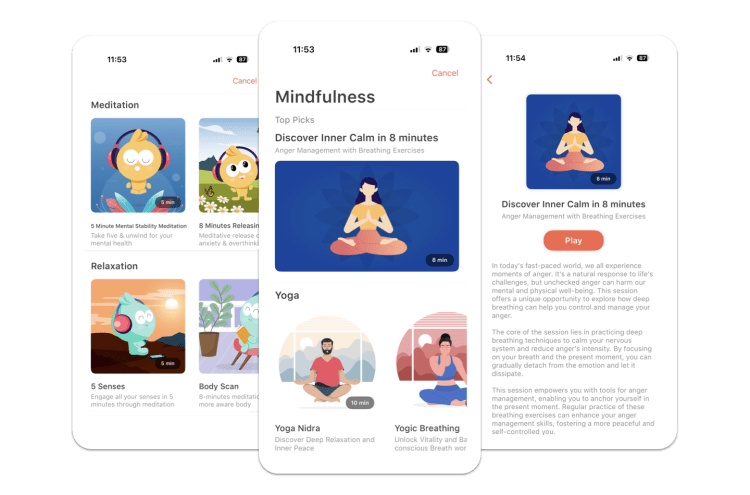
Giving people a library of guided sessions on their phone solves the other half of the problem. An empty quiet room asks employees to know what to do with the silence, and most do not.
- Yoga and Stretching Room
A yoga room supports gentle exercise during the day. Mats, foam rollers, and a mirror are enough, along with sufficient clear floor for someone to lie down without moving furniture. It earns its keep fastest in offices with a lot of sedentary desk work and a lot of back complaints.
- Snooze Room

A snooze room is a quiet area for short naps, fitted with recliners or bean bags.
Keep the sessions short and say so in the policy. A ten to twenty minute nap restores alertness, while a longer one tends to leave people groggier than before. A visible timer in the room does more to enforce that than a rule does.
- Fitness Center
A fitness center does not have to be large. Resistance bands, a few dumbbells, and mats cover most of what people will do in a twenty-minute window between meetings. Treat it as a movement space rather than a gym and it will get used by more than the handful of employees who already train.
- Digital Detox Zone
A digital detox zone is a tech-free space for stepping away from screens. A phone locker at the door is what makes it real, because otherwise it becomes a quiet room where everyone scrolls.
It works best in roles with constant notification load, and it pairs naturally with the broader mindfulness at work practices you may already be running.
- Creative Corner

A creative corner is a space for brainstorming or hands-on activities like drawing, painting, or crafting. Whiteboards, art supplies, and comfortable seating are the whole specification. It is the room type that sits closest to work, so watch it: if it starts hosting team sessions, it has become a meeting room.
- Hobby Haven
A hobby haven is somewhere to knit, read, or work on a puzzle during a break. The value is in the switch of attention rather than the activity itself, and it is the cheapest room here to pilot because it needs seating and very little else.
- Knowledge Nook
A knowledge nook is a small library or reading area with comfortable seating and shelves of books or magazines. It gives people a way to step away from their inbox that still feels productive, which matters most for the employees who struggle to take a break at all.
Once you have chosen the room types, the design details decide whether people use them.
How to design a wellness room to meet employee needs?
Designing a wellness room takes some planning. These are the elements that matter most in practice.
1. Choose the Right Location for Privacy
Discrete placement: Keep the room away from high-traffic areas. A tucked-away spot out of the main sightlines lets people use it without feeling watched, which is the single biggest predictor of whether they will.
Soundproofing: Thick walls or sound-absorbing panels are essential, not optional. A quiet room next to a busy kitchen is not a quiet room.
Privacy screens: Use screens to create zones within a single room so it can serve more than one purpose, such as meditation on one side and nursing on the other.
Signage: Clear occupancy signage prevents the most awkward failure mode. Use plain wording such as "In use" rather than anything that announces what the person inside is doing.
2. Ensure Comfort and Cleanliness
Comfortable seating: Recliners, sofas, or benches with cushions. For the lactation use case, a chair with arms and back support is worth specifying.
Easy-to-clean materials: Durable, wipeable surfaces last longer and reassure the next user.
Cleaning supplies: Keep disinfectant wipes in the room and name an owner for restocking. Rooms fail on restocking more often than on furniture.
Organized layout: Leave enough open floor that the room feels uncluttered. Cramming in more furniture makes a small room feel smaller.
3. Create a Relaxing Ambiance with Lighting and Décor

Natural light: Use it where the floorplan allows, with adjustable blinds so that anyone managing a migraine can shut it out.
Artificial lighting: Soft lamps on dimmers, not overhead fluorescents. Give the user control of the level.
Calming colors: Blues, greens, and warm neutrals. Avoid your brand palette if it is high contrast.
Biophilic elements: Plants and natural materials measurably change how a space feels, and green office design is worth reading up on before you spend anything on decor. Ventilation belongs in the same conversation, since indoor air quality at work affects a small enclosed room faster than it affects an open floor.
4. Include Amenities and Supplies Employees Will Appreciate
Basic amenities: Tissues, hand sanitizer, water, and a first-aid kit.
Relaxation tools: Stress balls, a white noise machine, and access to calming audio. Skip essential oil diffusers if anyone in the building has a scent sensitivity, which is more common than most facilities teams assume.
Storage solutions: Shelves or drawers for blankets, mats, and personal items, so the room resets itself between users.
Getting the Room Used, Not Just Built
A wellness room is one of the few wellbeing investments that is visible, permanent, and hard to walk back. That is what makes it worth doing, and also why it is worth getting right before the first employee walks in.
The build is the easy half. Settle the legal requirement for lactation space, write the usage policy, tell managers explicitly that using the room is not something they should be counting, and give employees something structured to do once they are inside it. Get those four things right and a converted store cupboard will outperform a beautifully designed room that nobody feels permitted to enter.
Frequently Asked Questions
Do Workplace Wellness Rooms Have Specific Guidelines and Etiquette?
Yes! To ensure fair use and harmony, establish clear wellness room guidelines, like time limits for usage or booking systems for peak hours. Employees should respect the room's purpose and leave it clean for the following user.
Is a wellness room legally required?
A general wellness room is not. A space to pump breast milk largely is: under the FLSA, as amended by the PUMP Act, most US employers must provide nursing employees with a private space that is shielded from view, free from intrusion, and not a bathroom, for one year after birth.
How big does a wellness room need to be?
Smaller than most teams assume. The functional minimum is privacy, a door that closes, a comfortable seat, and a flat surface. Converted store cupboards, unused phone rooms, and small offices all work. Soundproofing matters more than square footage.
Do Wellness Rooms Need to Be Large and Expensive?
No! With the correct elements, a small wellness room can still be practical. Thoughtful design, not size, matters most. Focus on comfort and functionality.
What is the difference between a wellness room and a break room?
A break room is social and shared: food, conversation, and noise. A wellness room is private and single-occupancy by default, used for rest, meditation, stretching, or pumping. The two serve opposite needs and should not be combined.
How do you stop people using the wellness room for meetings?
Remove it from the general meeting-room booking list, state in the policy that calls and meetings are not permitted, and give the room a single named owner who can push back. Without those three, overflow demand will win.
How long should someone use a wellness room for?
Fifteen to thirty minutes suits most uses, and naps work best at ten to twenty. Lactation breaks should be exempt from any time cap. Set these as norms rather than enforced rules, or people will avoid the room entirely.
Should Wellness Rooms Be Designed Based on Employee Input?
Absolutely! Employees know their needs best. By seeking their feedback, you create a room that truly serves its purpose, enhancing engagement and satisfaction.
What are some good wellness activities?
Some good wellness activities for workplace wellness rooms include meditation, yoga, light exercises, aromatherapy, journaling, puzzles, reading, and offering a quiet space for relaxation or social connection.