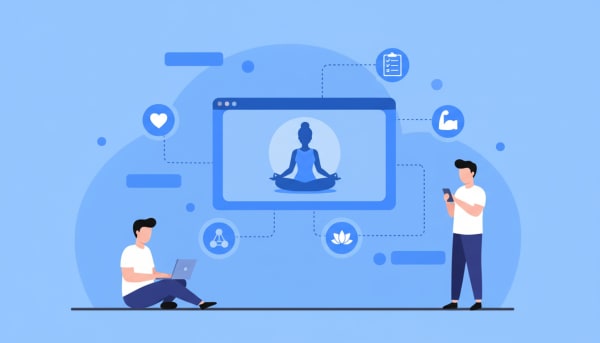

Employees want a wellness program that fits the life they actually have.
In practice that comes down to five things above all: support for mental and emotional health alongside physical fitness, options matched to their own health condition and fitness level, access that works around the working day, clear rules about who can see their health data, and leaders who visibly take part.
Few employee wellness programs deliver all five, and the reason is usually design. Organizations build them from industry trends and generic benchmarks, which produces something that looks complete on a benefits page and reads as irrelevant to the individual employee opening it.
As the radio journalist Brian Reed put it, ‘Everything is designed. Few things are designed well.’ The gap this creates between what companies offer and what employees need has a name: the well-being disconnect.
Let's start with what gets in the way, and then work through the 13 things employees actually want from a wellness program.
A recent Gallup poll found that today’s employees consider "an organization’s focus on employee well-being" a top priority when selecting an employer.
Key Takeaways
- Relevance decides participation. Offer a smoking cessation course to someone whose blood pressure is climbing from workload, and the whole program starts to look like box-ticking. Employees judge it on how closely it fits their own situation.
- Mental health has become table stakes. The WHO puts the global cost of depression and anxiety at $1 trillion a year in lost productivity, and employees now expect that support to arrive as part of the package.
- Sign-up friction costs more than budget does. Multi-page forms and approval chains spend a person's enthusiasm in the first five minutes, well before they reach anything worth doing.
- Managers set the ceiling. When a leader joins the challenge in public and talks about their own health, everyone else gets permission to take part. Vantage Fit co-founder Anjan Pathak runs this way, and it shows in who signs up.
- Time off is the request companies fund last. Mental health days named as such in policy, and leave people can genuinely take, do more for burnout than another app on the benefits page.
What is an employee wellness program?
An employee wellness program is a set of benefits, activities, and policies an employer runs to support the health of its workforce. Most cover four areas: physical health through fitness and preventive care, mental health through counseling and mindfulness support, financial health through planning and education, and social health through community and team activity. The strongest ones treat these as one connected offer, so an employee dealing with money stress finds support for it in the same place they log their steps.
Programs range from a single gym subsidy to a full platform with tracking, challenges, coaching, and rewards. What separates the two in practice is rarely budget. It is how closely the offer matches the people it is meant to serve.
What's Holding Back Employee Participation in Wellness Programs?

Understanding the psychological gap between knowing what's healthy and taking action is crucial when implementing workplace wellness programs. While many employees recognize the health benefits of activities like running or meditating, the lack of immediate tools, support, or coaching often leads to inaction.
This shows that comprehending the barriers that prevent employee engagement is crucial for designing more effective wellness initiatives.
Below are certain important factors:
1. Lack of Relevance
The issue of relevance cannot be overstated. For example, consider a typical office worker dealing with hypertension due to overloaded work.
If this employee is enrolled in a smoking cessation program, he/she may not resonate with it. This employee would rather benefit more from health risk assessments and regular guided mindfulness and therapy sessions designed to alleviate stress.
When wellness programs fail to address the diverse needs of their workforce, whether due to age, physical ability, or personal health priorities, employees may view these efforts as superficial or irrelevant.
2. Complexity in Accessibility
If participating in a wellness program is too complicated or not easily accessible, employees are less likely to engage.
For many employees, the first hurdle is often the enrollment process itself. If signing up for a wellness program involves navigating through multiple web pages, filling out lengthy forms, or dealing with bureaucratic approval processes, the initial enthusiasm can quickly wane.
‘If you want to encourage someone to do something, make it easy.’
- Richard Thaler, Former president of the American Economic Association
3. Non-Supportive Company Culture

The cultural aspect of how wellness is perceived within the company plays a crucial role. Even the best-intended programs will see limited participation if the work environment does not genuinely support and promote wellness.
For instance, if senior management seldom participates in or endorses wellness activities, employees might perceive these programs as unimportant or optional.
An employee might think twice about leaving their desk for a scheduled fitness class if their direct supervisor implicitly values uninterrupted work hours over scheduled wellness breaks.
This scenario often creates a disconnect between the company's promoted wellness initiatives and the actual day-to-day practices that influence employee behavior.
4. Privacy Concerns
Employees may be hesitant to share personal health information or participate in programs that track health data. The sensitivity around how this data is handled, stored, and potentially used is a substantial deterrent for many.
They fear that their personal health details could be accessed by unauthorized parties or accidentally disclosed through data breaches, which are not uncommon in the digital age.
5. Lack of Incentives
Incentives are a powerful motivator for participation in wellness programs. However, if the incentives are not perceived as valuable or directly beneficial, employee engagement can falter.
For example, a company might offer a free gym membership as an incentive to join a wellness program. While this might appeal to those already interested in fitness, it may not resonate with employees who prefer other types of health and wellness activities or those who already have gym memberships.
Thus, offering incentives that are too generic might not be compelling enough to motivate participation or sustain long-term engagement.
Suggested Read: 7 Wellness Incentive Ideas To Boost Your Corporate Programs
What do Employees expect from a Company-provided Wellness Program?

Those are the hurdles. Here are the 13 things employees ask for when a wellness program is built around them:
1. Holistic Well-being Approach

“Wellbeing is about how our lives are going. It encompasses all the things that are important to each of us and how we experience our lives. It's not only about happiness and health but also about living life to its fullest potential.”
– Iseult Morgan
Today's employees seek wellness programs that encompass all aspects of health: physical, mental, and emotional. A whole-person approach to corporate wellness programs might integrate:
- mindfulness practices to manage stress,
- nutrition counseling to promote healthy eating and
- regular fitness activities to promote physical wellness.
For instance, a company could integrate bi-weekly yoga and meditation sessions to help reduce stress alongside nutritional seminars led by a professional dietitian. This combination helps employees tackle health from multiple angles, enhancing both their mental clarity and physical vitality.
2. Mental Health Resources
Access to mental health resources is crucial at an age where hustle is normalized. Illnesses like depression and anxiety are skyrocketing at luminous speed. And when the mind is not one’s best friend, procrastination and absenteeism at work are inevitable.
In fact, according to WHO, every year, depression and anxiety lead to a staggering $1 trillion loss in productivity worldwide, predominantly impacting the global economy.
Suggested Read: Your All-in-One Corporate Mental Wellness Guide For Employers
Popular mental health support apps like Headspace, coupled with monthly in-house workshops on topics like stress management and resilience could be provided.
Educational seminars on mental health topics could be held, and the sense of taboo associated with mental health issues should be considered a thing of the past.
3. Personalized and Tailored Offerings

One-size-fits-all does not work when it comes to wellness. With diverse workforces come varied health needs and preferences. Employees expect wellness programs that cater specifically to their health conditions, fitness levels, and personal goals.
This could mean providing adjustable workout plans, diet regimes suited to different nutritional needs, or even local health clubs with personalized health coaching/plans. Such customization ensures that every employee can benefit from the program, regardless of their starting point.
4. Convenience
The accessibility of wellness programs directly influences their effectiveness. Employees prefer options that integrate seamlessly into their daily lives. On-site facilities, virtual workouts, and apps that track wellness activities encourage employees to engage with wellness initiatives without disrupting their schedules.
Programs should be flexible enough to accommodate different time zones and work schedules, especially in global companies.
Vantage Fit brings different aspects of wellness together in one seamless experience.
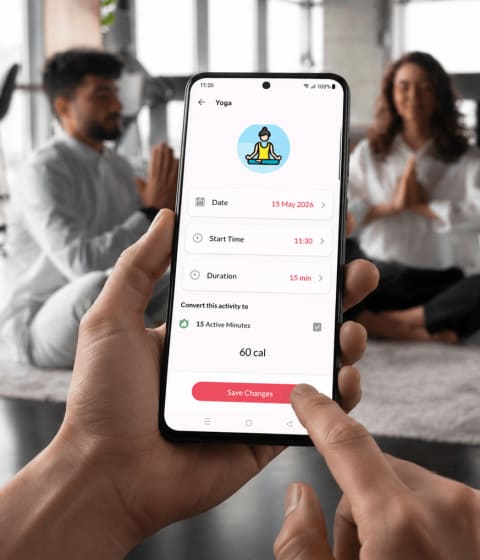
The app supports 30+ activity types, including steps, yoga, cycling, swimming, and heart rate tracking. It also syncs easily with wearables like Apple Watch, Fitbit, and Garmin, so employees can stay consistent without logging everything manually.
Beyond tracking, the experience feels more rounded. There’s guided content for meditation, mindfulness, and workouts, along with wellness challenges that bring in a sense of shared participation and keep things interesting over time.
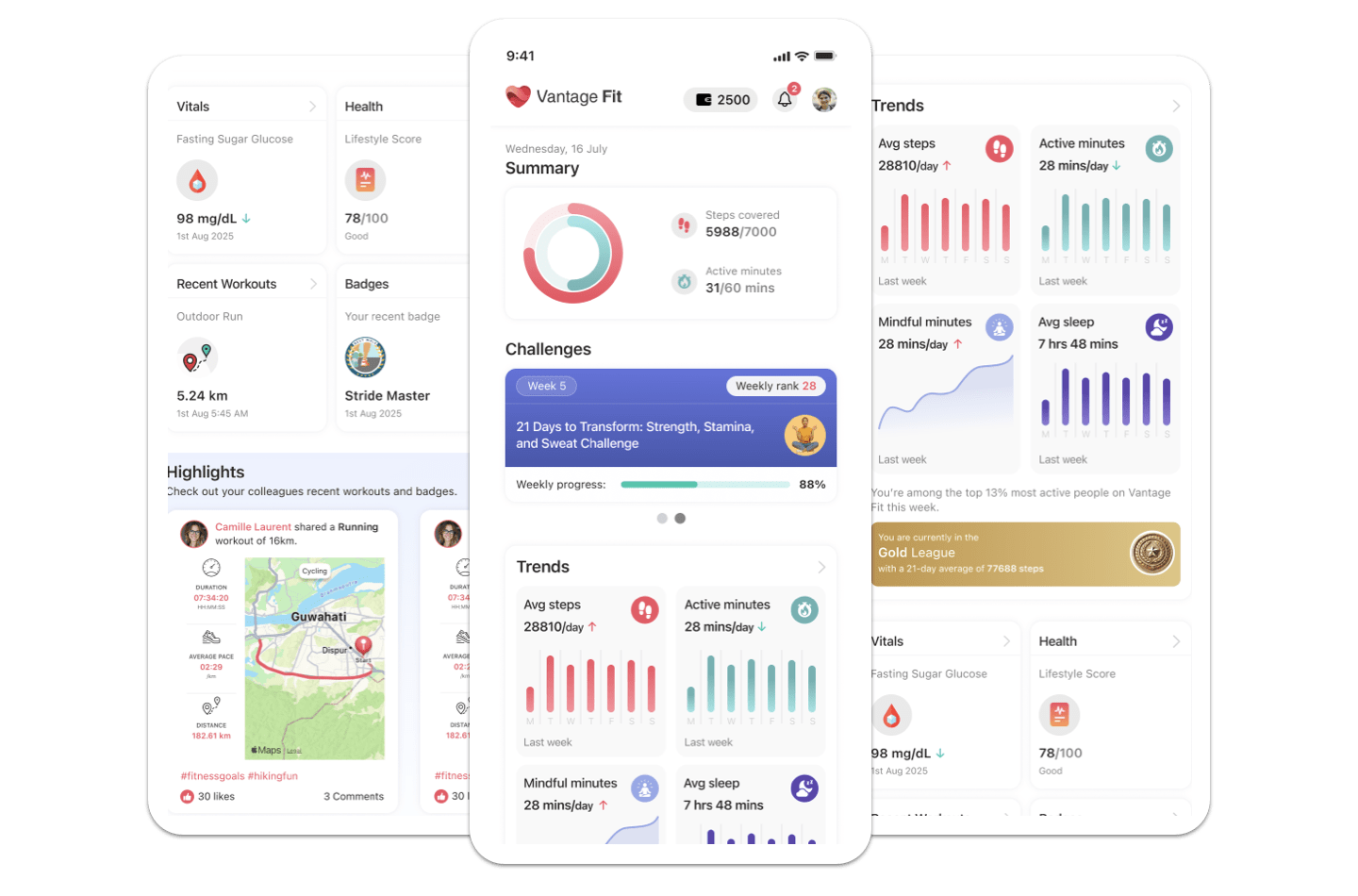
Such kind of flexibility shows up clearly in real programs.
In Tata Motors’ Step & Stride Challenge (powered by Vantage Fit), a six-month initiative with 1,248 active participants, employees engaged across multiple areas of wellness. They logged over 7,000 activities, tracked more than 7,200 meals, spent time on yoga sessions averaging 50 minutes, and built a daily mindfulness habit of around 7 minutes.
The program saw a 59% engagement rate, driven by a platform that supports different ways people choose to move, eat, and recharge.
5. Inclusive and User-Friendly Initiatives

It should be accessible to everyone within the organization, including those with disabilities or those who are technologically less savvy. This could involve providing -
- alternative formats for content,
- ensuring physical accessibility to wellness facilities, and
- designing user interfaces that are intuitive for all users.
Inclusivity also means offering a variety of wellness activities that cater to different cultural backgrounds and personal preferences. When a platform gets this right, employees notice. One of Vantage Fit's clients put it this way:
"It is engaging and has features that keep everyone motivated. From tracking activity levels to earning rewards, the app has made wellness accessible and fun for all our employees."
— Tara Shore, Niche Technology
6. Confidentiality and Data Privacy
Transparency about the handling of personal health information is critical. Employees need assurances that their data is secure, with clear policies on how it is used and who has access to it.
Companies should comply with relevant privacy regulations and communicate these policies clearly to all employees, emphasizing that participation in wellness programs will not impact their employment status.
7. Authentic Wellness Culture Supported by Leadership
Leadership's involvement can significantly influence the uptake of wellness programs. If a CEO participates openly in wellness challenges and shares their personal stories related to health, it sets a powerful example for the rest of the organization. This leadership endorsement can inspire wider employee engagement.

For instance, Vantage Fit’s Co-Founder, Anjan Pathak leads by example by actively participating in wellness challenges and sharing personal health stories. His involvement sets a strong precedent for the organization, inspiring employees across all levels.
8. Motivation
Motivation plays a crucial role in driving participation and engagement in workplace wellness programs. Employers must carefully design their wellness programs to cater to both types of motivation, ensuring they meet the diverse needs and preferences of their employees.

The most effective wellness programs are those that skillfully blend intrinsic and extrinsic motivators. They create an environment where employees are educated about the benefits of healthy habits, supported in their personal health goals, and encouraged by both internal satisfaction and external rewards.
9. Community-focused and Socially Responsible Initiatives

Modern employees increasingly seek meaning and purpose in their work, which includes a strong desire for their employers to contribute positively to the community and the broader society. And so, community-focused and socially responsible initiatives within wellness programs can profoundly foster a sense of collective purpose and satisfaction.
A company can integrate community service and social responsibility into its wellness programs in various ways that resonate with employees. For example, organizing group volunteer days allows employees to work together on local community projects, such as:
- planting trees,
- cleaning up local parks, or
- building homes with organizations like Habitat for Humanity.
And you know what you can do to notch it up a bit? Host a step challenge along with such a community volunteering activity. Your employees benefit doubly: Winning incentives for completing a step challenge and basking on the glory of doing something noble for the community.
10. Financial Wellness
A wellness program is as futile as a tiger going vegan if financial wellness is not one of its crucial features. Money is essential, or people won’t work long hours for no reason. However, financial wellness goes beyond just a paycheck.
An essential component of financial wellness is educational workshops and seminars.
These sessions can cover a range of topics, from basic budgeting and debt management to more complex subjects like investment strategies, retirement planning, and understanding employee benefits.
For example, a company might bring in financial experts to conduct monthly webinars on topics such as "How to Maximize Your 401(k)" or "Strategies for Paying Off Student Loans." These sessions can be tailored to the different life stages of employees, ensuring relevance whether they are early in their careers or nearing retirement.
Suggested Read: 5 Proven Steps To Achieve Financial Wellness For Employees
Connecting employees with financial assistance programs can provide crucial help during difficult times.
11. Caregiver Support and Work-Life Balance Considerations

The challenges of balancing professional responsibilities with caregiving duties can significantly impact employees' mental and physical health. One of the core aspects of supporting caregivers is offering flexible work arrangements.
This flexibility can take many forms, such as remote work options, flexible hours, or compressed workweeks.
For example, allowing an employee to start their day earlier or later can enable them to drop off or pick up children from school or attend to a family member’s medical appointments without the stress of conflicting schedules.
Similarly, remote work options can reduce commuting stress and provide employees with the ability to be physically present at home, offering direct support as caregivers when needed.
Companies can also offer emergency or backup care solutions. This could involve partnerships with childcare providers or emergency in-home care services for their elders. This kind of support is invaluable, as it reduces the panic and disruption often associated with last-minute caregiving challenges.
12. Environmental and Sustainable Wellness
One foundational step companies can take towards environmental and sustainable wellness is to create green office environments. This can involve using energy-efficient appliances and lighting, ensuring that buildings are LEED-certified, or implementing comprehensive recycling programs.
Encouraging active commuting is another effective way to promote environmental wellness. Initiatives like cycle-to-work programs can be supported by providing the office with secure bicycle storage and shower facilities.
Corporate wellness programs can also include partnerships with local and sustainable businesses. For instance, companies might cater office events with food from local organic farmers or host markets where local artisans and eco-friendly vendors can sell their goods to employees.
Employers can also offer incentives for employees who choose environmentally friendly commuting options, such as -
- public transport vouchers,
- carpooling systems, or even
- rewards for walking or biking to work.
Moreover, companies can gamify sustainability through eco-challenges where departments compete to reduce their carbon footprint or achieve specific sustainability goals. Won't that be fun?
Challenges might involve reducing energy consumption, minimizing waste, or increasing recycling rates.
Recognizing and rewarding the winning teams can further motivate employees, making environmental responsibility a fun and integral part of the corporate culture.
13. More Time Off

Companies that extend beyond the standard two-week vacation allowance give employees more opportunities to disconnect, recharge, and pursue personal interests or family time.
For instance, you can adopt policies that allow for unlimited paid time off (PTO), under which employees can take time off at their discretion, provided their performance meets their responsibilities.
Specifically allocating days for mental health is becoming increasingly common. These are paid days off that employees can use to manage stress, burnout, or other mental health concerns without having to classify it under general sickness.
By explicitly acknowledging mental health as a valid reason for absence, companies destigmatize mental health issues and underscore their commitment to the overall well-being of their workforce.
Many talented workers are leaving for workplaces that align with their personal belief system and show an authentic concern for individual employee wellbeing. People want a good job and a life well-lived.
- Iseult Morgan
How Have Tailored Wellness Programs Led to Success for Employees?

Three long-running programs show what the return looks like when a company builds wellness around its own workforce. All three were documented by Harvard Business Review in its 2010 study of wellness returns.
Johnson & Johnson saved an estimated $250 million in healthcare costs over the decade to 2010. Across 2002 to 2008, the program returned $2.71 for every dollar it spent.
SAS Institute was reported in the same study to hold voluntary turnover at roughly 4%, well below the software industry norm at the time.
MD Anderson Cancer Center built a workers’ compensation and injury care unit into its employee health department in 2001. Over the six years that followed, the center reported an 80% fall in lost workdays and a halving of its workers’ compensation premiums.
These figures are now more than a decade old, and each program ran for years before it paid back. That is the honest lesson in them: returns of this size come from programs a company sustains over time.
These programs demonstrate that when employers invest thoughtfully in the health of their employees, the returns extend far beyond simple cost savings, leading to a more engaged, healthy, and committed workforce.
How do you measure whether a wellness program is working?
Participation rate is the first number to look at, broken down by team, role, and location. A headline figure of 40% can hide a program that reached head office and missed the shop floor entirely.
Beyond that, four signals tell you most of what you need:
- Repeat participation. The share of people who come back for a second challenge or a second month says more about the program than sign-up numbers do.
- Feedback on relevance. Ask the people who stayed out what would have brought them in. Irrelevance and privacy worry are the two objections that stay quiet until you ask directly.
- Absence and claims data. Sick days, prescription patterns, and workers' compensation claims move slowly, so read them over quarters and years.
- Retention. SAS held voluntary turnover at roughly 4% alongside a long-running program, and retention remains the outcome finance teams find easiest to value.
Set the baseline before launch. Measuring any of this afterwards means guessing at what changed.
Vantage Fit Corporate Wellness Program

At Vantage Fit, we believe everyone's wellness journey is unique. That's why our platform customizes wellness plans to each employee's needs, tracking everything from daily steps and heart rate to sleep patterns and nutritional habits.
Our app enriches your workplace wellness with mindfulness sessions to calm the mind and exciting gamified fitness challenges that ignite friendly competition. Plus, employees love our interactive challenges, real-time leaderboards, and rewards that acknowledge their personal achievements.
The app also integrates seamlessly with your existing HR systems for a smooth setup and works perfectly with major health platforms, making it a flexible option for any organization, big or small.
Ready to elevate workplace wellness?
Connect with us to see how Vantage Fit can help you foster a happier, healthier, and more productive team. Schedule a demo today, and let's design a wellness program your employees will truly embrace and enjoy.
Frequently Asked Questions
What do employees expect from wellness benefits?
Employees expect to be treated as whole people. A program built around step counts alone covers a small slice of what they need. They want mental health support that is easy to reach on a bad week, and they want the program to fit around the working day. Underneath all of it sits one condition: they need to know their health data stays private.
What kind of wellness perks do employees want?
The perks that land are the ones employees would have chosen for themselves. A blanket gym membership mostly rewards the people who were already going. What employees ask for is a plan shaped around their own goals, mental health days named as such in policy, and help with the money worries that follow them into work.
What should HR look for in a wellness vendor?
Start with whether the platform can flex. One built only for runners will lose everyone else by week three. Ask how health data is stored and who can see it, and expect a written answer. Ask what the experience looks like for someone new to this kind of technology. Then look hard at engagement reporting, because it tells you whether anyone is using what you bought.
What makes a wellness program truly personalized?
A personalized program bends to fit the employee. Workout plans adjust to different fitness levels. Diet guidance accounts for the nutritional needs someone actually has. Coaching addresses the health condition in front of it. A health risk assessment at the start gives you the baseline to build all of that on.
How do you increase engagement in wellness programs?
Make joining effortless, because enthusiasm rarely survives a long form and an approval chain. Once people are in, relevance is what keeps them, so the activities have to suit more than one kind of employee. Managers need to be seen taking part; employees read a program that leadership skips as optional. Tata Motors held 59% engagement across 1,248 participants over six months on exactly this footing.
What feedback should we collect after launching a wellness program?
Participation rates tell you who the program reached and, more usefully, who it missed. The rest has to be asked out loud. Find out whether the activities felt relevant, what got in the way for the people who stayed out, and whether the rewards felt worth earning. Ask about data privacy directly, because that particular worry stays quiet until invited.