
A biometric test, or biometric screening, is a short, on-site health check where a health professional measures key indicators, blood pressure, cholesterol, blood glucose, weight, and BMI, to build a baseline picture of an employee's health.
Companies typically offer these screenings as part of broader wellness programs. The reason is identifying health risks early is far more cost-effective for both employers and employees than managing chronic conditions later.
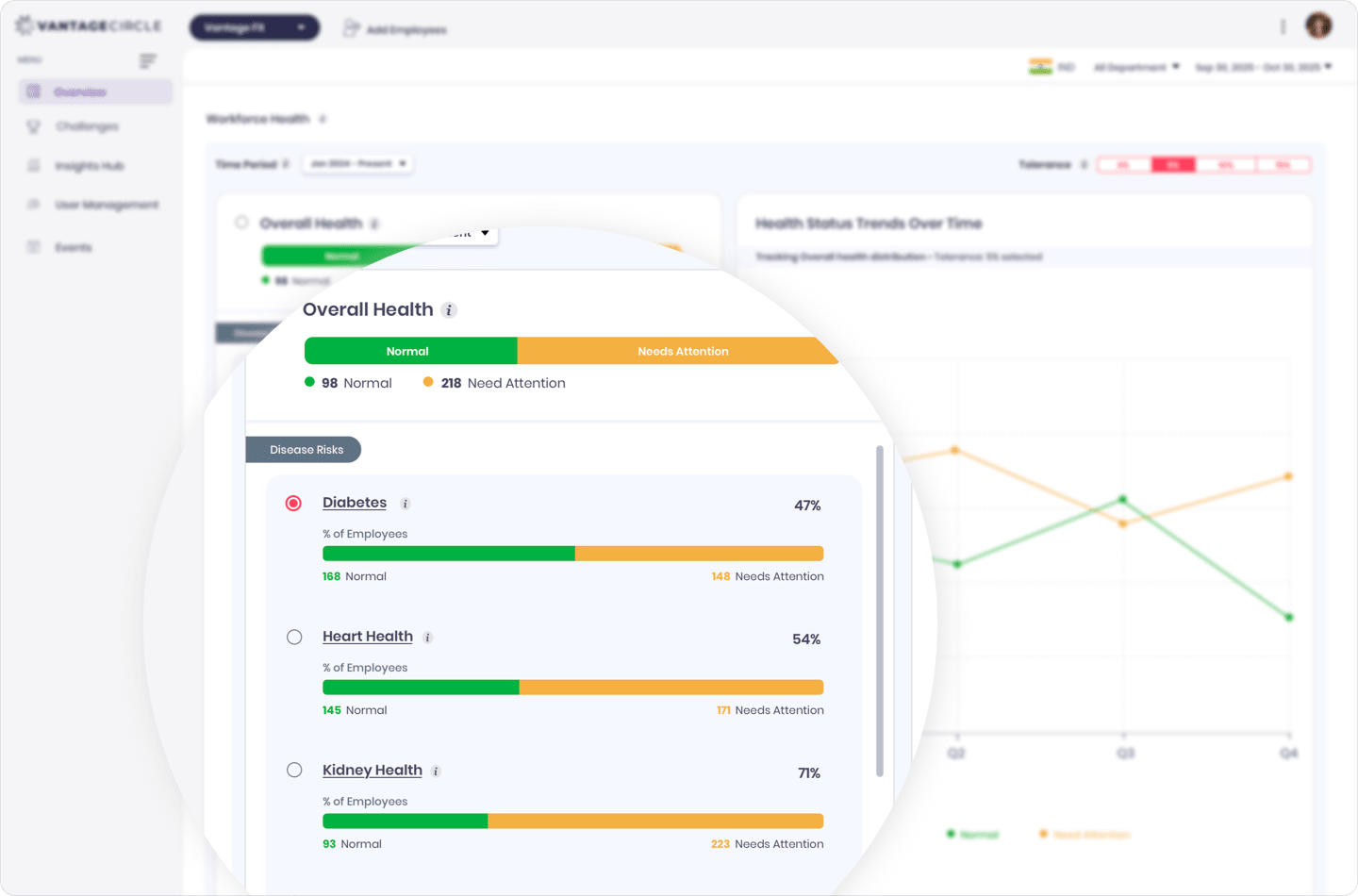
Platforms like Vantage Fit build on this foundation by enabling ongoing health tracking, allowing employees to upload lab results. The platform also gives HR teams insights into workforce health trends beyond a one-time screening.
To be healthy means having physical, mental, and social well-being. It implies that people are free from diseases, and that they can recover and bounce back swiftly whenever they fall ill.
There are several ways people can stay healthy, such as exercising regularly, eating healthy foods, doing yoga, and meditation. In an organization, the health of its employees is of the utmost importance: it's a key factor in productivity, attendance, and morale.
But maintaining a healthy body and mind is becoming increasingly hard for corporate employees. Environmental pollution, preservatives and chemicals in food, sedentary behaviors, workplace stress, and rising use of tobacco, alcohol, and drugs mean conditions like heart disease, cancer, and chronic illness are common even among otherwise healthy-seeming people.
Key Takeaways
- A biometric test measures core health indicators, blood pressure, cholesterol, blood glucose, weight, and BMI, to give employers a baseline picture of employee health.
- 74% of US companies already include biometric screenings in their workplace wellness programs, according to a Cornerstone OnDemand survey.
- Early detection through screenings helps employers catch preventable chronic conditions before they drive up health care costs.
- Participation depends on incentives, privacy assurances, and clear communication about how the data will be used.
- Tools like Vantage Fit's Lab Report Upload extend a one-time screening into a continuous, AI-powered view of workforce health trends.
How can employers help identify health risks and improve employee health?
As has been mentioned, employee health is very important for employers. Employers worldwide have started offering health and wellness programs and similar initiatives for their employees.

From introducing wellness challenges to organizing health fairs, employers take steps to ensure their employees stay healthy.
One more way to assess and improve employee health, which is growing quickly in popularity, is conducting a Biometric screening.
What is a biometric screening?
Biometric screenings are tests in which physical measurements and biometric data are taken to assess employees' health. They are short, convenient, and can be conducted in offices and work sites. They allow employers to set a reference standard for employee health status and assess changes over time.
Usually, health professionals conduct biometric health screenings. The screening measures height, weight, blood pressure, blood glucose, blood cholesterol, etc.
Also, employees must fast before the test as blood samples are taken intravenously. Before the blood samples are taken, employees are given questionnaires. They must fill them up with relevant information such as family history, behavior, medical conditions, etc.
Many biometric test providers include other methods to cut costs and effort. But, an excellent biometric screening always has blood draws. Blood tests are the most reliable and consistent way to ascertain health problems.
The screening results are sent to the employees personally, and personal information is not shared without consent.
Why should employers provide them?
One of the biggest problems for employers is the increasing rates of health care costs. The vast majority of health care costs are because of health conditions that could have been prevented if detected earlier. Thus, employers need to conduct health assessments to identify health risks and nip them in the bud.
According to a survey, 74 percent of US companies provide biometric tests for their workplace health and wellness programs.
If you are an employer wanting to start a wellness program in your company, you should start by conducting a biometric test. Doing so will allow you to analyze the health of your employees and then take steps to improve it accordingly.
Also, having a proper health analysis will help you understand how to design and strategize the wellness program.
Conducting a biometric test can be very beneficial for employers and employees alike.
Curious what catching health risks early is worth in dollars? Estimate it with our free Employee Wellness ROI Calculator.
Importance of biometric screenings for employers
Biometric screenings give employers a structured way to understand workforce health rather than guessing at it. The main reasons employers offer them:
- They help establish a baseline of employee health status through detailed reports.
- They identify chronic health conditions of employees in the earliest stages.
- You can learn what kinds of wellness initiatives would benefit you the most.
- Such tests show concern and care for the health of your workforce.
- They help reduce health care costs.
- They can help improve productivity, morale, satisfaction and decreases absenteeism.
- Biometric testing promotes health awareness and healthy habits.
- They enable you to formulate a health plan or organize health coaching sessions to improve employee health.
Benefits of biometric tests for employees

The benefits run both ways. Employees get a clearer picture of their own health, not just their employer. Below are what they gain from participating:
- They can access information about their health.
- They can identify health risks such as high cholesterol levels and take steps to reduce them.
- Biometric screenings save time as they would not require going to a medical facility to get the tests done.
- They recognize you as a concerned employer, and it helps them stay satisfied in their job.
- They can perform better and be more productive.
All these reasons are more than enough for you to offer biometric screening tests for your employees. But just offering one for your workforce is not enough. You have to make sure participation and engagement are high.
Also, you need to be able to take relevant action once the results come in.
Pro tips for employee participation in biometric screenings

Turnout is the biggest lever employers have over how useful a screening is. A few tactics that reliably move it are mentioned below.
- Offer incentives to your employees for completing the screening. Offering rewards like paid leaves, healthy snacks, or cash prizes are guaranteed ways to increase participation.
- Allow your employees to bring their spouses and family members for the test as well.
- Ensure the privacy of your employees’ information. Reassure them that all data obtained is kept confidential.
- Promote the importance and benefits of biometric screenings to your employees through emails and newsletters.
Ways to increase post-screening engagement
A screening only creates value if what happens after it does too. Employers can extend that value by the following:
- Hire a biometric screening provider or health coach that can engage employees after the results are in. Renowned providers do this by sending emails, calls, or texts to employees at risk of health problems.
- Help your employees to adopt healthy behaviors by introducing wellness initiatives such as weight loss challenges, cycle to work schemes, etc.
- Invite a health coach or nutritionist to your workplace to educate and advise individuals with high risks of health problems.
Vantage Fit's Lab Report Upload feature takes biometric data process further. After a screening, employees can securely upload their blood test results to the platform. They get an AI-powered health summary that flags individual risk markers, from glucose and cholesterol to haemoglobin, translating clinical data into clear, actionable insights rather than a one-line "everything is normal."
For example, during Tata Motors' Step & Stride Challenge, 1,248 active participants maintained an average organisational BMI of 24 (the healthy range), with 7,275 total activities logged.
The data illustrates how continuous platform-based tracking sustains the health gains a one-time biometric screen reveals.
Ananya Bhattacharya, a nutritionist and lifestyle-modification coach with 16 years in corporate health, on the shift that digital health tools are enabling for workplace wellness:
"Virtual fitness and wellness programs, water and sleep apps, online health assessments that auto-calculate BMI and give you a tailored wellness program — these technologies make workplace wellness accessible to employees at the click of a finger. Telemedicine and virtual mental-health support have changed what's possible too."
— Ananya Bhattacharya, Nutritionist & Lifestyle-Modification Coach, AnanyasNourishMe | Listen to the full episode
Bottom line
If your objective is to improve your employees' health, you should start by conducting a biometric test.
A biometric test will help your employees, and you take the proper steps towards improving health. They are a great way to identify potential health risks such as cardiovascular disease, diabetes, and cancer. They are also quick, efficient, and convenient.
After all, if your employees are healthy, they will be able to function correctly. Without healthy employees, workplace productivity, team morale, and company image will all suffer.
So, make sure your employees are on the right path towards health and wellness by conducting a biometric screening.
Frequently Asked Questions About Biometric Tests
What does a biometric screening test check for?
A standard workplace biometric screening checks height, weight, BMI, blood pressure, blood glucose, and blood cholesterol. Employees also fill out a short questionnaire covering family history and lifestyle behaviors alongside the physical measurements.
Can employers require biometric testing?
No, participation should stay voluntary. Employers can boost turnout with incentives, such as paid leave, healthy snacks, or small rewards, but making the test mandatory undermines trust in the wellness program.
What not to do before a biometric screening?
If the screening includes a blood draw, avoid eating or drinking anything but water beforehand, since food affects glucose and cholesterol readings. Providers typically share fasting instructions ahead of the screening date.
What are some examples of biometric screenings?
Common biometric screenings include blood pressure checks, blood glucose and cholesterol tests, and BMI or waist-circumference measurements, alongside a short health questionnaire covering family history and lifestyle habits.
Who has access to the results of a biometric test?
Results are sent to each employee individually, and personal health data is not shared with the employer without the employee's consent. Employers typically only receive de-identified, aggregate trends across the workforce.