
A white label wellness program is a fully built wellness platform that someone else develops, hosts, and maintains, which you license and launch under your own name and logo.
Published benchmarks put the software at roughly $1 to $12 per user per month. It is the right call when you want a branded wellness app live in weeks instead of a build that runs for quarters.
The part most search results skip: three very different buyers shop for this, and they are not buying the same thing.
- Employers and HR teams want a branded app for their own staff, so they care about engagement, rewards, and reporting.
- Brokers, consultants, and insurers want something to sell or bundle for clients, so they care about multi-tenant setup, margin, and revenue share.
- Gyms, clinics, and coaches want a member-facing app, so they care about content, retention, and speed to ship.
Sort out which one you are first. Almost every other decision on this page follows from it.
Vantage Fit is a corporate wellness platform that runs branded challenges, rewards, and analytics for employers with a few hundred to several thousand employees, and it publishes its per-employee pricing rather than quoting privately.
Key Takeaways
- White label and private label mean the same thing. Reselling is different: you sell platform access on to other organizations rather than only using it yourself.
- Cost benchmarks run about $1 to $3 per user per month for basic digital tools and $7.50 to $12 or more for full-service programs, before setup and branding fees.
- Vantage Fit publishes its rates. Unlimited annual plans work out to roughly $0.83 to $1.67 per employee per month depending on headcount, with go-live in about two to three weeks.
- The trade-off is speed and cost against control. You get a proven platform quickly, but you inherit someone else's roadmap.
- Ask about data ownership, compliance audits, and who staffs the program before comparing prices. Those three answers separate vendors more than feature lists do.
What is a white label wellness program?
A white label wellness program is a pre-built wellness platform that a vendor develops and operates, and that you brand as your own. The vendor handles the software, content, hosting, integrations, and updates. You supply the brand and the audience.

When an employee or member logs in, they see your logo, your colors, and often your program name. They generally do not see the vendor.
Behind that surface, the vendor is running activity tracking, challenges, rewards, reporting, and support.
The reason buyers choose this route is speed. Building in-house means a mobile app on two operating systems, wearable integrations, a rewards engine, a reporting layer, and a security program to defend it all.
Licensing a platform that already does those things turns a multi-quarter engineering project into a configuration and launch project.
White label vs private label vs reselling
These three terms get used interchangeably in sales calls, and they should not be. The difference determines your contract, your margin, and your compliance exposure.
| What it means | Who the end user is | Typical buyer | |
|---|---|---|---|
| White label | You license a built platform and brand it as yours | Your own employees or members | Employers, HR teams, gyms |
| Private label | Same arrangement, different name for it | Your own employees or members | Used interchangeably with white label |
| Reselling | You sell branded platform access on to other organizations | Your clients' employees or members | Brokers, consultants, insurers, agencies |
White label and private label are the same thing. Both describe branding an existing platform with your identity.
An insurer that brands a wellness app with its own logo and offers it to policyholders is running a white label program.
Reselling adds a commercial layer. That same insurer could also sign up gyms and offer them the platform under each gym's branding, taking a margin on every seat.
The insurer becomes a channel rather than only an end user. Reselling needs multi-tenant support, per-client branding, and a revenue share agreement written into the contract.
If a vendor's pricing page does not distinguish between these, treat it as a question to ask rather than a detail to assume.
Who white label wellness platforms are actually for
1. Employers and HR teams
You are launching a corporate wellness program for your own workforce, and you want it to feel like part of your culture rather than a third-party bolt-on.
Branding matters here mostly for adoption. People engage more with something that looks like it belongs to their employer.
Weight your evaluation toward engagement mechanics, rewards, reporting depth, and how much admin work lands on your team.
2. Brokers, consultants, and insurers
You want a wellness offering to bundle with benefits, differentiate a renewal conversation, or sell as a standalone line.
Your priorities are different: multi-tenant architecture, per-client branding, wholesale pricing, and whether the vendor stays behind the scenes on client calls.
Ask explicitly whether the contract permits resale, because many standard white label agreements do not.
3. Gyms, clinics, and coaching businesses
You want a member-facing app that extends your service between visits. Content depth and retention features matter more than HR reporting.
Your integration list looks different too, leaning toward scheduling and payments rather than HRIS and payroll.
Most platforms marketed as corporate wellness are built around an employer administrator model, so confirm the fit before committing.
How much does a white label wellness program cost?
This is the single most common follow-up search on this topic, and most vendor pages avoid answering it.
Current industry benchmarks put corporate wellness platform pricing in three tiers:
| Tier | Cost per user per month | Annual per user | What it typically covers |
|---|---|---|---|
| Basic digital | $1 to $3 | $12 to $36 | Branded activity tracking, step challenges, basic dashboards |
| Mid-range | $5 to $7.50 | $60 to $90 | Custom branding, wearable integrations, health assessments, targeted content |
| Comprehensive | $7.50 to $12 or more | $90 to $144 or more | Dedicated support, coaching, biometric data management, custom development |
Here are three realistic, worked examples to help you sanity-check your next vendor quote:
- 50 employees on a basic plan at $3 per user per month. That is $1,800 a year for the software line.
- 500 employees on a mid-range plan at $5 per user per month. That is $30,000 a year for the software line.
- 1,000 employees on a full-service plan at $7.50 per user per month. That is $90,000 a year for the software line.
The gap between that software line and your all-in cost is the part that surprises buyers. On fully managed programs the final number often lands at several times the license alone. Budget separately for:
- Setup and branding fees. A one-time charge for your logo, palette, and custom app deployment, from a few hundred to several thousand dollars.
- Incentives and rewards. If points convert to something real, that budget is yours, not the vendor's.
- Biometric screenings. Roughly $36 to $80 per participant when integrated into the program.
- Live health coaching. Around $140 to $165 per user for multi-session packages.
- Communications and launch support. Sometimes bundled, often not.
Contracts commonly run one to three years, and per-user rates drop as headcount rises.
If you are comparing quotes, normalize everything to cost per enrolled user per month with setup amortized over the term. Otherwise you are comparing different things.
For a fuller breakdown of program budgets beyond the software line, see our guide to corporate wellness program costs.
A worked example with published rates
Most vendors in this category quote privately. Vantage Fit publishes its pricing, which makes it a useful yardstick when you are sizing a budget.
At 250 employees:
| Plan | What it covers | Price | Per employee per month |
|---|---|---|---|
| Single Challenge Basic | One 4-week step challenge | $2,000 | Event pricing |
| Single Challenge Pro | One 4-week challenge, all activities, branded signup | $2,500 | Event pricing |
| Unlimited Basic | Year-round step challenges | $4,000 per year | $1.33 |
| Unlimited Pro | Year-round, all activities, branded signup, account manager | $5,000 per year | $1.67 |
Volume discounts apply automatically as headcount rises. At 500 employees the Unlimited Pro plan is $7,500 a year, or $1.25 per employee per month. At 1,000 employees it is $10,000 a year, or $0.83.
Above 1,000 employees, pricing moves to a custom quote.
Read against the tiers above, that lands at or below the basic digital band while including branded signup, a dedicated account manager, advanced analytics, and SSO and HR integrations, which the benchmarks generally place in the mid-range band.
Tip: Ask for pricing based on enrolled users rather than total headcount. On a 1,000-person company with 40 percent enrollment, that single distinction can change your annual cost by tens of thousands of dollars.
What you get in a white label wellness platform
Feature lists blur together across vendors, so it helps to group them by what they actually do for you.
1. Branding and configuration
- Your logo, colors, and program name across the mobile app and web portal
- A custom app listing on the App Store and Google Play, or distribution inside your existing app
- Branded emails, notifications, and reporting
2. Tracking and integrations
- Step and activity tracking, calorie and nutrition logging, sleep and mood tracking
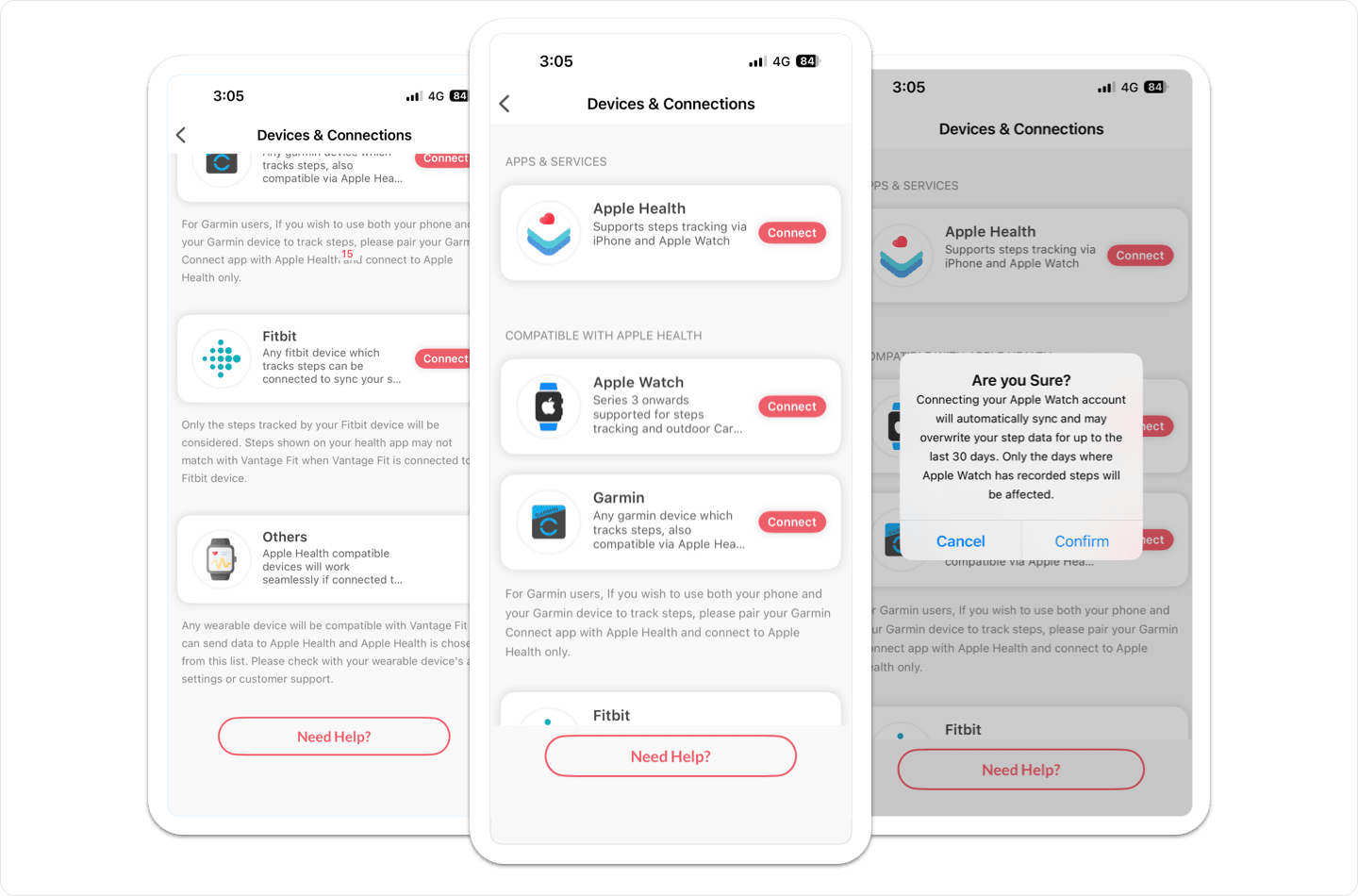
- Wearable and health app sync, typically Apple Health, Apple Watch, Fitbit, and Garmin
- HRIS, SSO, and payroll connections for provisioning and incentive payouts
3. Engagement mechanics
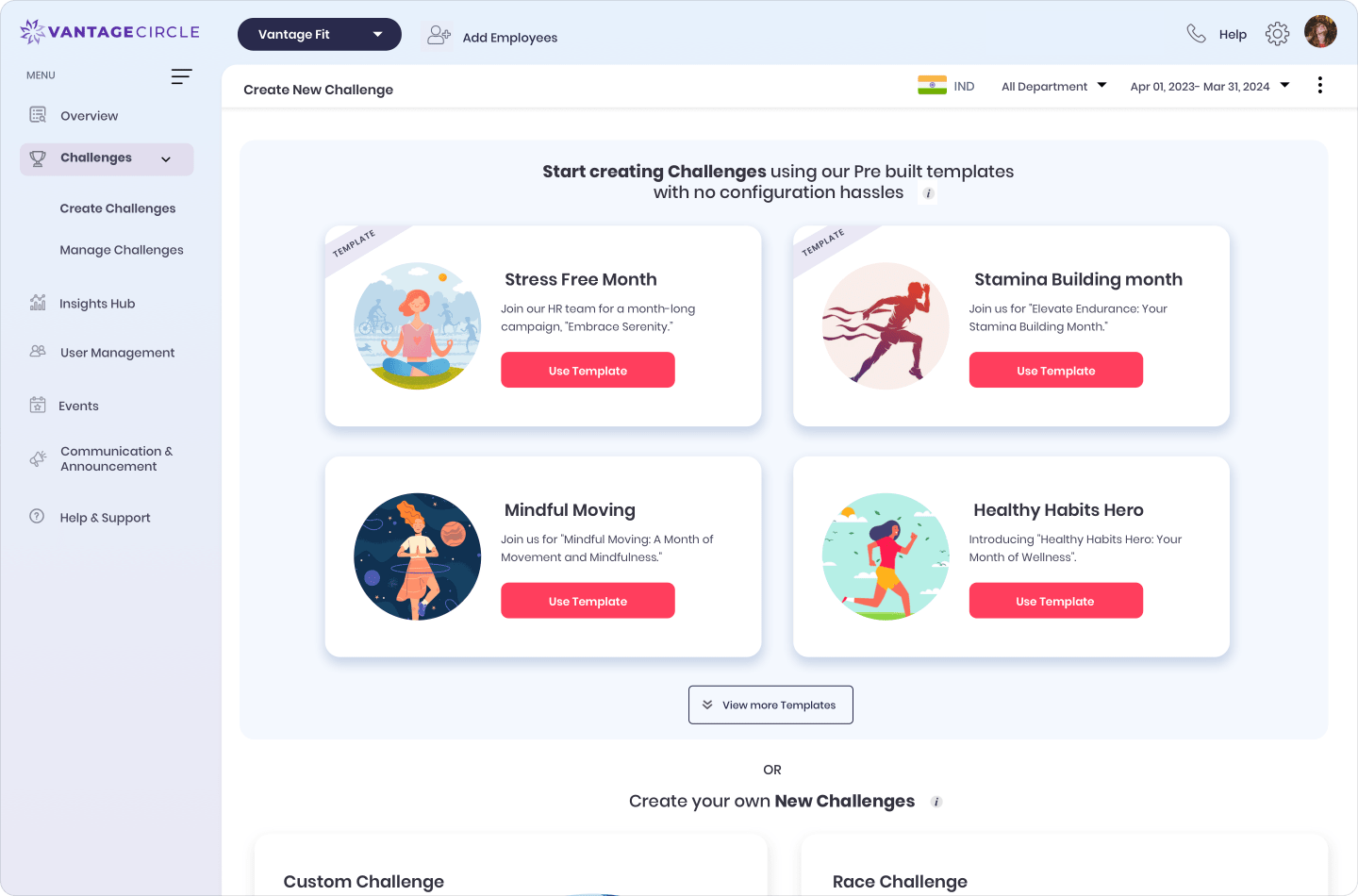
- Team and individual wellness challenges, leaderboards, and social feeds
- Points, badges, and gamification
- A rewards catalog, and the ability to fund and cap incentives
4. Administration and reporting
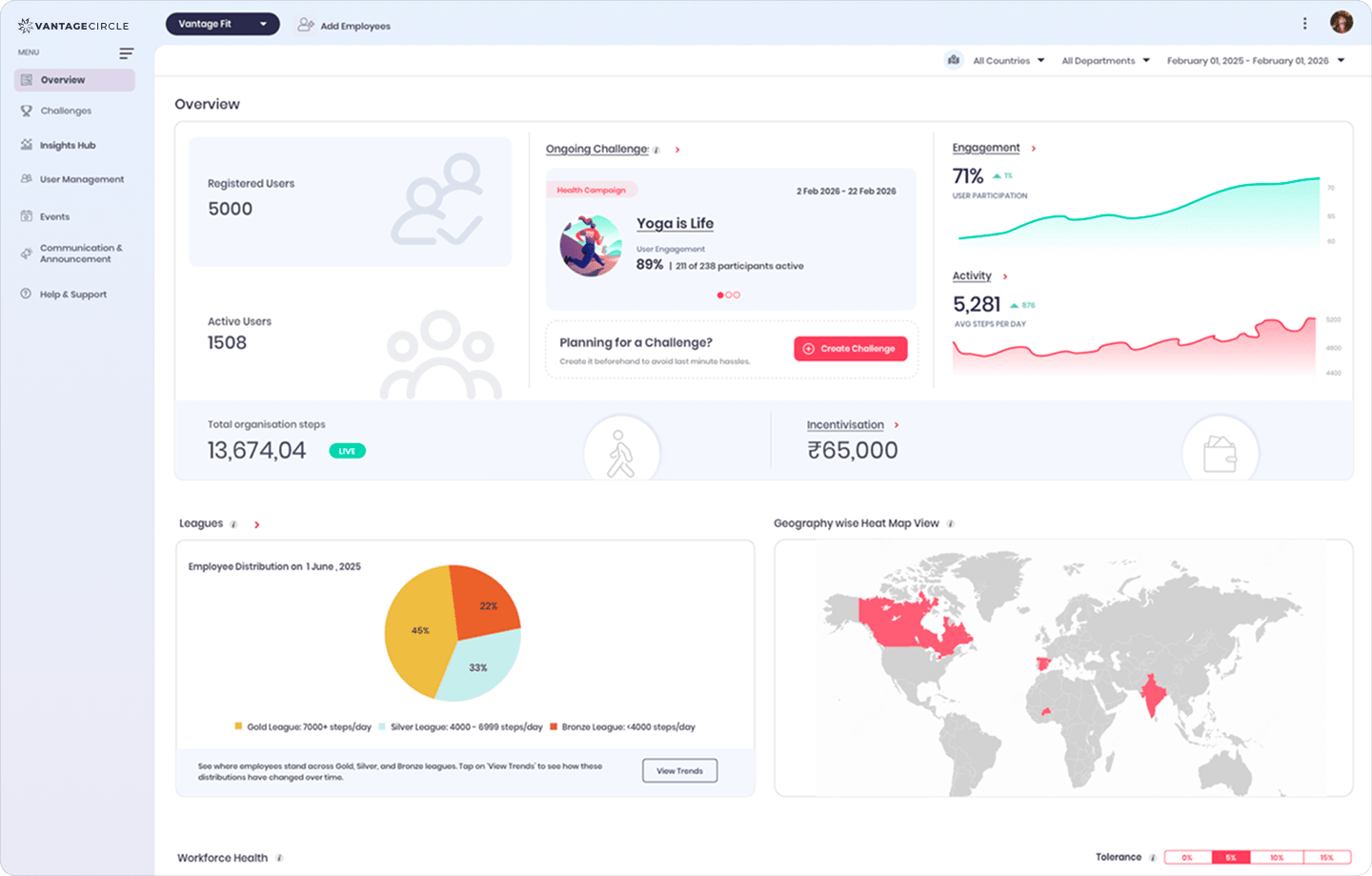
- An admin console for launching campaigns and managing participants
- Engagement analytics segmented by team, location, or demographic
- Exportable reporting for leadership and, where relevant, for insurers
The list that matters is the one you will actually use in year one. Buying a full-service tier for features you have no one to administer is the most common way this purchase goes wrong.
Build, buy off the shelf, or white label
Most organizations stepping into workplace wellness are choosing between three paths, and white label sits in the middle.
| Time to launch | Control | Best when | |
|---|---|---|---|
| Buy off the shelf | Fastest | Lowest. Vendor branding stays visible | Brand consistency is not a priority and you want the least work |
| White label | Weeks | Surface control of brand and program design | You want it to feel like yours without owning the technology |
| Build in-house | Quarters to years | Full | Wellness is core to your product and you have engineering to spare |
Building in-house is the option that most often gets abandoned partway. It is not just the initial app.
It is ongoing maintenance across operating system updates, wearable API changes, security reviews, and a content pipeline that has to stay fresh or engagement dies.
Unless wellness technology is part of what you sell, that cost rarely clears the bar.
White label is the middle path. You get a platform already tested on other populations, and you shape it to your culture instead of shaping it from nothing.
Benefits of a white label wellness platform

1. Speed to launch
A configuration and branding project measured in weeks replaces a development project measured in quarters.
For a program that has to launch alongside open enrollment or a new fiscal year, this is often the deciding factor.
2. Lower and more predictable cost
You pay a per-user license instead of funding engineers, infrastructure, security review, and a content team.
The cost is also easier to defend internally, because it scales with participation rather than sitting as fixed overhead.
3. Brand consistency drives adoption
When employees open an app carrying their employer's identity, participation reads as part of the culture rather than a vendor pitch.
That perception gap matters for enrollment, which is the number every wellness plan ultimately lives or dies on.
4. The platform keeps improving without you
Challenge formats get stale, wearable APIs change, and tactics that worked two years ago stop landing.
On a licensed platform, that maintenance is the vendor's problem, and improvements reach your whole user base without a project plan.
5. Compliance and security become someone's full-time job
Handling health-adjacent data brings obligations that few HR teams are equipped to own. A serious vendor runs encryption, access controls, and independent audits as core operations.
Ask for the documentation rather than taking the claim on trust. Depth of review varies a great deal between vendors.
Where white label falls short
A licensed platform is not the right answer for everyone. These are the situations where it tends to disappoint.
1. You inherit someone else's roadmap
Surface customization is not the same as control. You can change colors, content, and challenge design.
You usually cannot change core workflows, data models, or the app's structure. If your program depends on something the platform does not do, you wait on the vendor's priorities.
2. A platform is not a program
This is the most common failure. Software gets bought, launched, and handed to an HR generalist who already has a full workload.
Nobody promotes it, nobody runs the challenge calendar, and engagement flatlines by month three.
The research is blunt on this. A systematic review in the Journal of Occupational and Environmental Medicine found that businesses with a staff member dedicated to wellness are ten times more likely to offer a program at all.
In that same review, 50.1 percent of employers named lack of staff resources as a barrier to running one.
Scale does not fix it either. A 2022 study in Healthcare found that establishments with more than 500 employees were less likely to have more than 25 percent of employees participating, across five of six program types.
That study also found senior leadership support was the strongest predictor of sustained implementation, ahead of firm size or industry.
First-time programs in particular need a partner who brings program management, not just a login. Ask what the vendor staffs versus what they expect you to run.
3. Generic content can miss your population
Stock wellness content is written for a broad average. A workforce that is largely shift-based, field-based, or spread across very different health cultures may not see itself in it.
Check whether you can substitute your own content, and whether the platform supports the languages and units your people actually use.
4. Compliance gets more complicated, not less
Incentive design runs into regulatory limits, and those limits differ by jurisdiction.
A vendor can supply infrastructure and documentation, but accountability for how you design and communicate incentives usually stays with you.
Smaller organizations without benefits counsel tend to underestimate this.
Suggested Read: Vantage Fit: A Complete Solution to Your Employee Wellness Program
How to choose a white label wellness program
Feature comparison tables are the least useful part of this process, because nearly every vendor checks nearly every box. The answers below separate them.
Vendor due diligence checklist
Work through these before you compare prices. Anything a vendor will not answer in writing is your answer.

Ask for two or three references from organizations of your size and in your sector.
Ask those references about month twelve rather than launch week. Launches almost always go well. Sustained engagement is the real test.
White label wellness platforms compared
The vendors below all offer branded wellness platforms, but they are built for different buyers.
We evaluated the top platforms on the market based on multi-tenant capabilities, pricing transparency, integration depth (HRIS/wearables), and engagement mechanics to identify the best fit for different buyer types. Each assessment draws on the vendor's published product and pricing documentation as of August 2026.
| Platform | Best suited to | Notable emphasis |
|---|---|---|
| Vantage Fit | Employers wanting branded challenges with rewards and analytics | Published pricing, gamified challenges, global reward redemption |
| CoreHealth | Wellness providers, brokers, and resellers | Platform built for partners to deliver under their own brand |
| WellSteps | Employers and resellers | Explicit reseller program alongside employer plans |
| Wellness360 | Employers and partners wanting an app-first program | Technology plus compliance support |
| Wellics | Employers wanting whole-person wellbeing coverage | Mental health, fitness, and nutrition in one platform |
| GoPivot | Programs built around incentives | Points-based rewards driving behavior change |
1. Vantage Fit

Vantage Fit is a single-platform corporate wellness platform built around challenges, rewards, and analytics, with company branding applied to the parts employees touch first.
- Company-branded entry point. The Pro plans include a company-branded signup and customized participant emails, so the program arrives under your name.
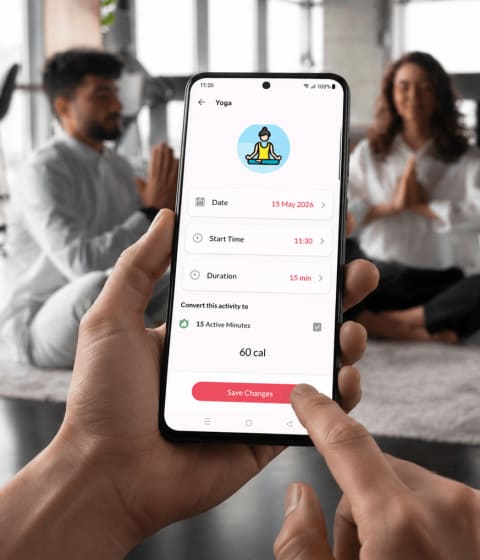
- All-activity tracking. A step tracker, calorie counter, sleep and mood tracking, and walking, running, cycling, and yoga on the Pro plans, with wearable sync on iOS and Android.
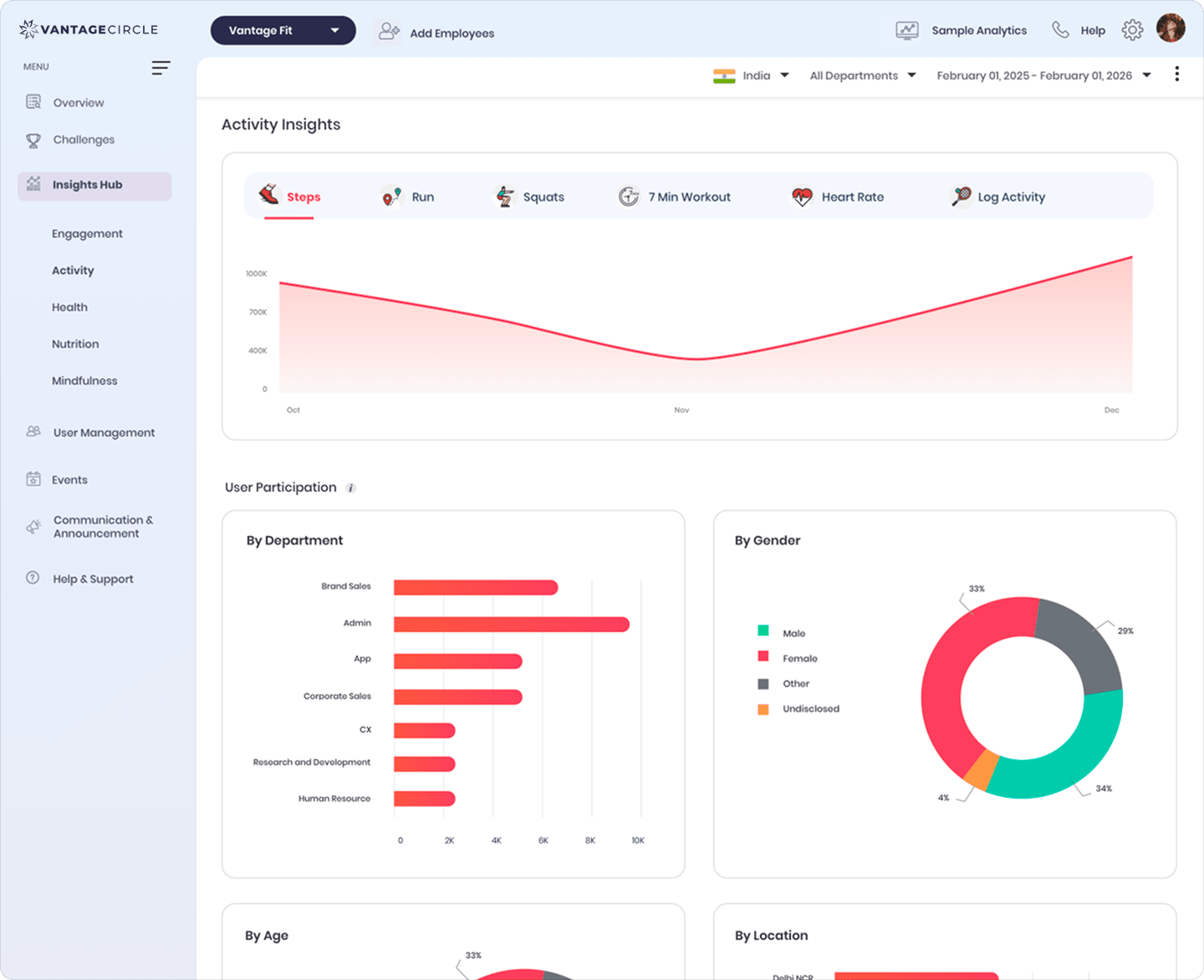
- Built around engagement. Team and individual leaderboards, achievement badges, built-in surveys, and automatic reward delivery with global redemption.
- Reporting you can take to leadership. Advanced analytics and custom dashboards on Pro, plus SSO and HR system integrations. Basic includes standard reporting dashboards.
- A team, not just a login. Pro includes a dedicated account manager through launch and beyond. Basic includes email onboarding and help center access.
- Fast to launch, in many languages. Estimated go-live is about two weeks on Basic and three weeks on Pro, with 14 or more languages supported.
Pricing is published rather than quote-only, starting at $2,000 for a single 4-week challenge at 250 employees and $4,000 a year for unlimited challenges, with volume discounts above that.
Vantage Fit works with enterprises including Grid India, Keva Flavours, Heidrick & Struggles, and ITC.
2. CoreHealth
CoreHealth positions its platform for wellness companies, brokers, and resellers who deliver programs under their own brand rather than for a single employer.
If you are the one selling wellness on to clients, this partner-first model is the relevant comparison.
3. WellSteps

WellSteps offers a customizable corporate wellness solution covering assessments, challenges, incentives, and reporting.
It runs both employer programs and an explicit wellness reseller track, which makes it worth a look if resale is part of your plan.
4. Wellics

Wellics focuses on whole-person employee health, bringing mental health, physical fitness, and nutrition into one platform.
It offers customizable wellness plans and interactive tools such as health risk assessments and challenges, with a data-driven approach to reporting.
5. GoPivot

GoPivot is built around a points-based reward system that encourages behavior change through tangible rewards.
If your program design leans heavily on incentives, that emphasis is the differentiator.
6. Wellness360

Wellness360 offers a white label wellness app with health assessments, activity tracking, and challenges, and positions technology plus compliance support as part of the package.
It is a reasonable fit for buyers who want an app-first program.
Suggested Read: Corporate Wellness Companies: A Buyer's List
The bottom line
White label wellness is the right choice when you want a branded, credible program running quickly and you have no appetite for owning wellness technology.
Budget between $1 and $12 per user per month for software, plus setup and incentives on top. Expect the platform to shape your program as much as you shape it.
Get three things straight before you sign: which buyer you are, who will run the program day to day, and what happens to your participant data if you leave.
Vendors that answer those clearly and in writing are the shortlist. The rest is feature-list noise.
Frequently Asked Questions
What is a white label wellness program?
A white label wellness program is a ready-built wellness platform you license and launch under your own brand. The vendor runs the software, content, and updates. Your employees or members see only your logo and program name.
What are white label wellness apps?
Branded mobile wellness apps built and maintained by a vendor. They handle activity tracking, challenges, rewards, and wearable sync, while the app carries your identity in the App Store and Google Play.
How much does a white label wellness program cost?
Expect $1 to $3 per user per month for basic digital tools, $5 to $7.50 for mid-range, and $7.50 to $12 or more for full-service programs. Setup and branding fees are charged separately.
How much does a wellness program cost per month?
Corporate wellness software typically runs $1 to $12 per user per month. A 500-person company on a mid-range plan at $5 per user pays about $30,000 a year for software alone.
How much does Vantage Fit cost?
At 250 employees, a single 4-week challenge starts at $2,000 and unlimited annual challenges start at $4,000. That is about $1.33 per employee per month, with volume discounts above 250.
How much does it cost to white label an app?
Branding is usually a one-time setup fee, from a few hundred to several thousand dollars. It covers your logo, colors, and app store deployment. The per-user license is charged on top.
What is the difference between white label and private label wellness?
Nothing. Both mean licensing an existing wellness platform and branding it as your own. Reselling is the different one: you sell branded platform access on to other organizations for a margin.
Who uses white label wellness platforms?
Three buyers. Employers branding a program for staff, brokers and insurers bundling wellness for clients, and gyms, clinics, and coaches extending service to members. Each needs different features.
What is a drawback to white label wellness programs?
You inherit the vendor's roadmap. Branding, content, and challenges are yours to change; core workflows are not. The bigger risk is treating software as a program, which stalls engagement within months.
How do you customize a white label wellness program?
Apply your logo, colors, and program name across the app and portal. Then configure challenges, rewards, and content for your population, and brand every outbound email, notification, and report.
What are the key features of a white label wellness platform?
Custom branding, activity and nutrition tracking, wearable sync, challenges and leaderboards, a rewards engine, segmented analytics, and HRIS or SSO integrations. Multi-tenant support matters only if you plan to resell.