
Introduction
A corporate step challenge app is software that lets HR teams run company-wide walking competitions, syncing employee step counts from phones and wearables onto a shared leaderboard. The best options for 2026 are Vantage Fit for full wellness programs, Pacer for Teams for one-off events, and WeMove for self-service challenges from $2 per user a month.
Vantage Fit is a corporate wellness platform that runs gamified step challenges with built-in rewards, wearable sync, and admin analytics for companies with 500 to 10,000+ employees. This list is for the person signing the contract. For a personal step counter, see the best step tracker apps. To launch a challenge you have already scoped, use the step challenge guide.
Key Takeaways
- Set the daily step goal near 7,000 rather than 10,000, because a 2025 Lancet Public Health meta-analysis of more than 160,000 adults found health benefits plateau there.
- Four to six weeks is the right challenge length, and IBS Software’s 28-day March to Fitness challenge reached 88% engagement across 500+ participants.
- Published pricing spans about $1 to $6 per user per month, and annual billing can halve it, as inKin drops from $6 to $3 per user.
- Three vendors here changed brand or owner: Reaction Club is now WeMove, Corporate Fitness App is listed as MoveZenGo, and MoveSpring sells through Reward Gateway.
- Fitbit can no longer run a step challenge, because Google removed Challenges, Adventures, and Open Groups on March 27, 2023.
Best Corporate Step Challenge Apps at a Glance
Eleven of the 14 apps below are corporate platforms with admin reporting. The last three are free apps with none. They also differ on whether pricing is published at all: Vantage Fit, WeMove, and inKin publish per-user rates, while Terryberry, MoveSpring, and GoJoe quote on request. Prices checked August 2026.
| App | Best for | Pricing (as published) |
|---|---|---|
| Vantage Fit | Full wellness program with rewards and analytics | From $2.50/employee/week, falling to $0.75 at 2,000+ |
| WeMove (ex-Reaction Club) | Self-service challenges by company size | From $2/user/month |
| MoveSpring by Reward Gateway | Map-based challenges inside a wider suite | Not published |
| Myles Wellbeing | Gift-card rewards, billed per signup | £4/user one-off; Pro £6/user/mo |
| Corporate Fitness App (MoveZenGo) | Event-style challenges, manual entry | From about $1/user/month |
| Pacer for Teams | One-off challenges, no long contract | About $454/month per 100 participants |
| Big Team Challenge | Large seasonal events | £500 base per 100, then £4.40 each |
| inKin Corporate Wellness | Many formats, cheapest annually | $6/user/mo monthly, $3 annual |
| Terryberry | Recognition plus inclusive scoring | Not published |
| Strive Competitions | Multi-metric contests, iPhone only | Free core app; paid premium |
| GoJoe | Social challenges, 60+ activity types | Calculator-based quote |
| StepUp Pedometer | Offline step counting, no setup | Free, ad-supported |
| Empower by CharityMiles | Charity-linked challenges | Free to employees |
| Fitbit | Data source only, cannot run challenges | Free with device |
What Is a Corporate Step Challenge App?
A corporate step challenge app collects employee step data and ranks it on a shared leaderboard. It reads that data from phone sensors via Apple Health or Google Fit, or from a Fitbit or Garmin wearable. It then gives HR an admin dashboard for participation and rewards. That admin layer separates it from a personal pedometer.
A consumer tracker like Fitbit answers one question: how many steps did I take. A corporate app answers what a program owner is asked. Who enrolled, which departments lag, and did engagement hold after week two. Free apps like StepUp count steps accurately but leave HR exporting spreadsheets by hand.
How to Choose a Corporate Step Challenge App
Choose a corporate step challenge app on five criteria. Step capture, admin reporting, reward fulfillment, pricing model, and inclusive scoring. Most shortlists get the first three right and fail on the last two, which are what decide whether the program survives its second year.
Step capture without a wearable. Confirm it counts phone-sensor steps via Apple Health or Google Fit. A mandatory wearable limits the program to employees who already own one.
Admin reporting by group. Ask to see the live dashboard. You need participation broken out by department, because that is what a renewal conversation runs on.
Rewards that arrive automatically. Check whether the platform fulfills gift cards itself or hands you a CSV to process by hand.
A pricing model that survives scale. Per-participant pricing is cheap at 100 employees and expensive at 5,000. Per-user-per-month flips that. Model both at your real headcount.
Inclusive scoring. A steps-only leaderboard excludes anyone who swims, cycles, or uses a wheelchair. Look for activity conversion, and test it with our free activity to steps converter.
Ask every vendor one more thing: what happens between challenges. Campaign-only tools need HR to relaunch something each quarter, and that maintenance cost never appears on the quote.
Corporate Step Challenge Platforms: Full Comparison

Vantage Fit
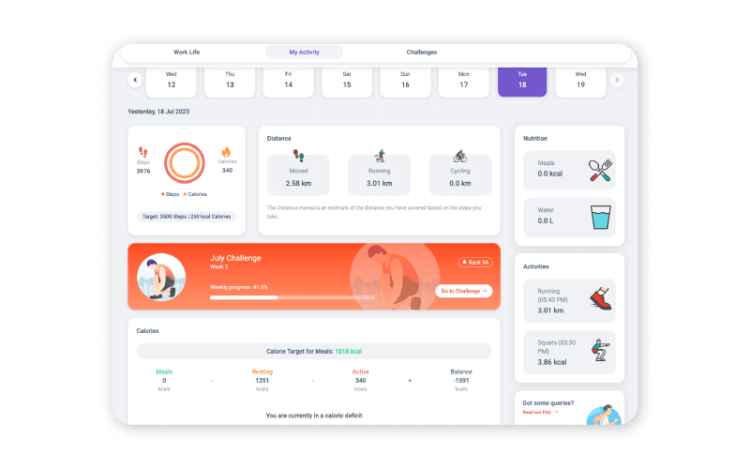
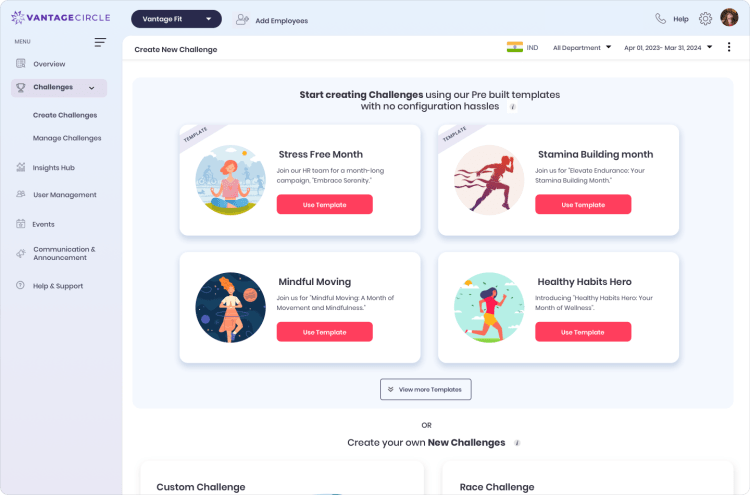
Vantage Fit is a corporate wellness platform built for companies running step challenges at scale rather than one-off events. Admins launch from a template, employees sync steps from a phone or wearable, and progress lands on a live leaderboard with redeemable points attached.
The reporting separates it from a step counter. Admins see enrollment, active participation, and engagement by group, which is what a program owner needs at renewal.
Proof from live programs: IBS Software’s 28-day March to Fitness challenge hit 88% engagement across 500+ participants. Tata Motors’ six-month Step & Stride Challenge reached 59% engagement with 1,248 participants averaging 6,246 steps a day.
Recommended for: Companies that want step challenges to sit inside a full wellness program, with rewards, wearable sync, and admin reporting in one place.
Android App
Yes (Rating: 4.5/5 ⭐️)
iOS App
Yes (Rating: 4.3/5 ⭐️)
Web-Based Portal
Yes
Daily Step Challenges with Participant Leaderboards
Team and Individual Leaderboards (Pro)
Walk, Run, Cycle, Yoga and More Activity Types (Pro)
iOS and Android Apps with Wearable Sync
Steps, Sleep, Heart Rate and Mood Tracking
Automatic Reward Delivery with Global Redemption (Pro)
Advanced Analytics and Custom Dashboards (Pro)
SSO and HR System Integrations (Pro)
Company-Branded Signup and Custom Employee Emails (Pro)
14+ Languages Supported
Tata Motors
IBS Software
Wipro
Landmark Group
Allston Trading
Brazosport ISD
Single Challenge (4 weeks)
Basic or Pro, priced per employee
Unlimited Challenges
Basic or Pro, year-round annual subscription
Rate
From $2.50 per employee per week at 25 to 75 staff, falling to $0.75 at 2,000+
Above 1,000 employees
Custom pricing

WeMove (formerly Reaction Club)
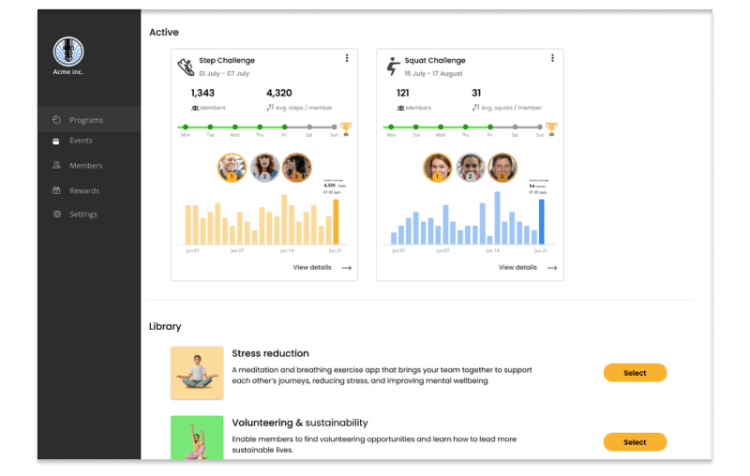
Reaction Club now operates as WeMove, a self-service platform built around step challenges. It reports 1,500+ customers including Microsoft, Amazon, and Pfizer.
Companies build challenges around their own workforce, with gamification and social feeds carrying the engagement. Note the brand change when searching for reviews, since older listings still appear under Reaction Club.
Recommended for: Mid-sized to large organizations looking to increase employee physical activity and engagement.
Android App
Yes (Rating: 4.6/5 ⭐️)
iOS App
Yes (Rating: 5/5 ⭐️)
Web-Based Portal
Yes
Customizable Challenges
Real-Time Progress Tracking
Social Engagement
Gamification Elements
Strong Integrations
Comprehensive Analytics
Microsoft
Amazon
Pfizer
Hyundai
Nespresso
From
$2 /user/mo, tailored during onboarding
Starter
Small business, 10 to 100 employees
Pro
Mid-market, 100 to 1,000 employees
Enterprise
1,000+ employees, custom pricing

MoveSpring by Reward Gateway
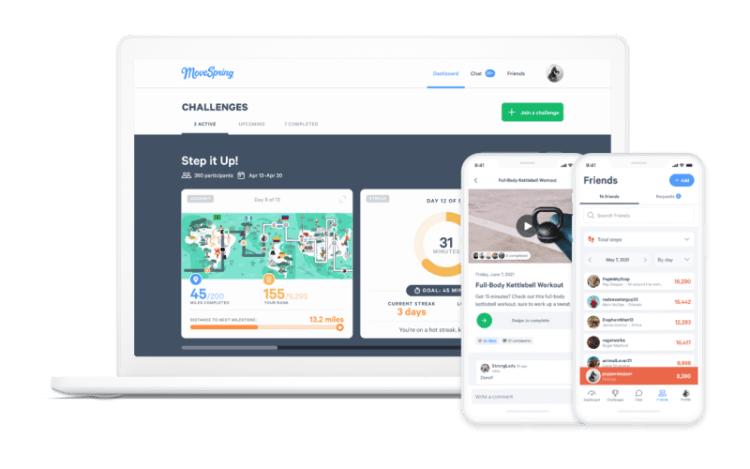
MoveSpring runs step challenges designed to hold engagement. Its “voyage” mode offers a game-like virtual map, while “target” mode lets groups set distance, time, or step goals. Teams can also attach a fundraising goal.
Check the buying route first. Reward Gateway acquired MoveSpring in March 2022, and movespring.com now redirects to Reward Gateway, so it is sold inside a wider engagement suite rather than standalone.
Recommended for: Organizations that want map-based, game-like step challenges rather than a plain leaderboard.
Android App
Yes (Rating: 3.8/5 ⭐️)
iOS App
Yes (Rating: 4.3/5 ⭐️)
Web-Based Portal
Yes
Gamification
Social Engagement
Customized Step-Challenges
Virtual Map with Adventures
Integration Capabilities
Real-time Leaderboards
Amazon
Nike
Deloitte
Uber
Lyft
HP
Custom Pricing
Not published; movespring.com now redirects to Reward Gateway

Myles Wellbeing
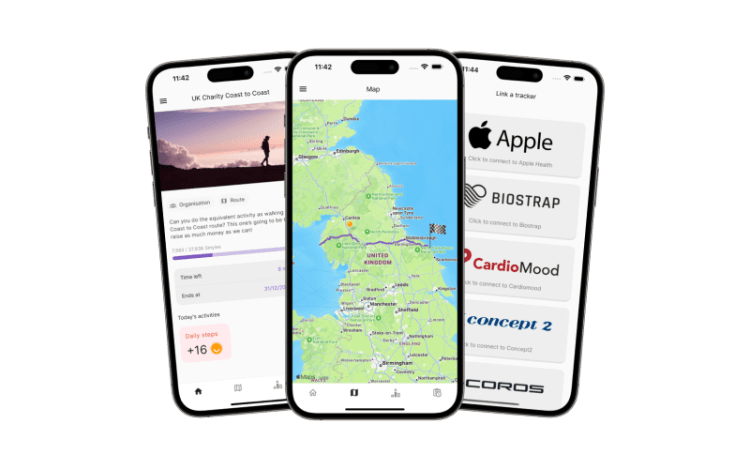
Myles rewards a range of activities rather than steps alone, and points convert to gift cards. Employees link Fitbit, Apple Health, or Google Fit to join challenges.
Its pricing is unusually flexible and, unlike most of this list, published: you only pay for employees who actually sign up.
Recommended for: Teams that want gamified wellness with tangible gift-card rewards attached to challenge completion.
Android App
Yes (Rating not available)
iOS App
Yes (Rating: 4.8/5 ⭐️)
Web-Based Portal
Yes
Personalized Coaching Plans
Virtual Challenge Library
Social Support with a Community of Walkers
Integration Capabilities
Reward Points for Completing Wellness Challenges
Dell
Capital One
NHS
Trace Solutions
Bulb
One Off
£4 /user for a single challenge, up to 45 days
Pro
£6 /user/mo monthly, or £5.50 /user/mo billed yearly (up to 400 staff)
Platinum
Custom pricing for 400+ employees

Corporate Fitness App (MoveZenGo)
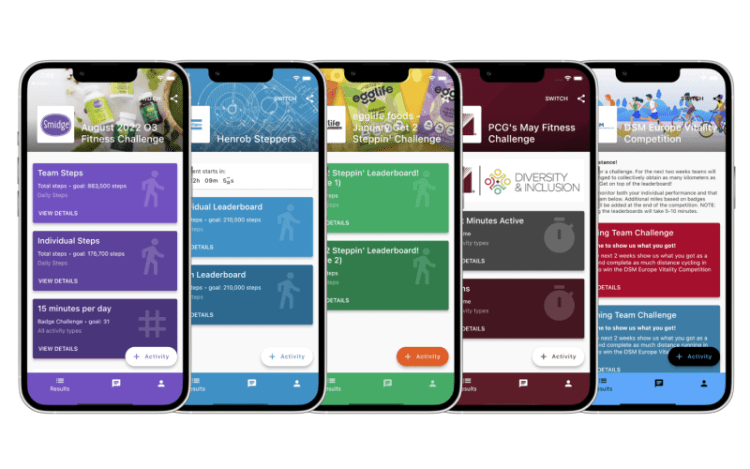
Corporate Fitness App runs step, time-based, and distance-based challenges, with manual activity entry for employees who cannot log steps conventionally. It reports 2,149 events hosted for 814 organizations.
The product is now listed as MoveZenGo on software directories, and the vendor site no longer publishes a rate card. Confirm both the brand and the billing unit in writing before signing.
Recommended for: Companies running discrete challenge events who prefer paying per participant rather than a monthly subscription.
Android App
Yes (Rating: 4.9/5 ⭐️)
iOS App
Yes (Rating: 4.6/5 ⭐️)
Web-Based Portal
Yes
Integrations
Manual Entry of Activities
Time-based Challenges
Distance-based Challenges
Inclusive and Personalizable
Siemens
Meta
Accenture
Campbell’s
Hyatt
Pro
From $1 /user/mo per third-party software directories
Free Trial
Up to 5 users for 14 days, no card required
Note
Vendor site no longer publishes a rate card; confirm on a quote

Pacer for Teams
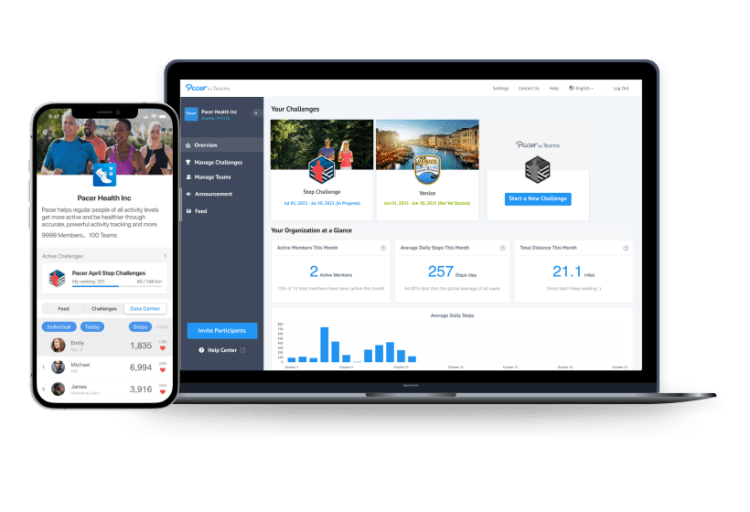
Pacer is built for team challenges, supporting virtual races, map-based routes, and distance goals. It integrates with major trackers and reports 18,000+ challenges for 5,500+ organizations across 190+ countries.
Budget monthly, not per event. Pacer has moved to a monthly model scaled to participant count with no long-term contract, so the flat one-time fees in older comparisons no longer apply.
Recommended for: Teams running a single, time-boxed step challenge who want fixed pricing rather than a per-user subscription.
Android App
Yes (Rating: 4.7/5 ⭐️)
iOS App
Yes (Rating: 4.8/5 ⭐️)
Web-Based Portal
Yes
Virtual Adventure
VIP Customer Support on Subscription
Social Engagement and Motivation
Integrations
Daily Step Goal Challenge
Wellness Challenge
Amazon
Microsoft
Johnson & Johnson
Salesforce
UBS
HSBC
Monthly
Priced by total participants; about $454/month for 100 participants
Terms
No hidden fees and no long-term contract
Custom Pricing
For more than 1,000 participants
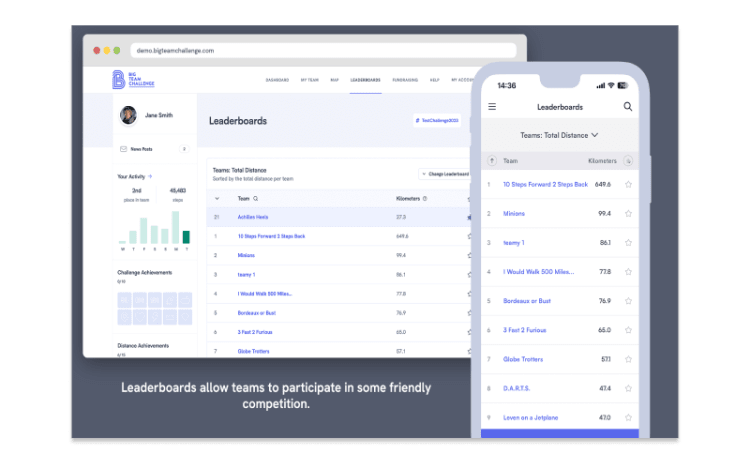
Big Team Challenge
Big Team Challenge manages medically integrated fitness programs for healthcare systems, universities, and municipalities, with virtual classes and client-branded apps.
Pricing is a £500 base covering the first 100 participants, then £4.40 each beyond that, billed at the end. Challenge management, custom reporting, and custom routes cost extra. That suits one large seasonal event rather than continuous programming.
Recommended for: Corporations, fitness centers, and healthcare facilities needing expert management and medically integrated wellness programs.
Android App
Yes (Rating: 4.2/5 ⭐️)
iOS App
Yes (Rating: 4.7/5 ⭐️)
Web-Based Portal
Yes
Medically Integrated Fitness
Comprehensive Management
Consulting Services
Virtual Solutions
Data and Analytics
MercyOne
University of Illinois
OhioHealth
YMCA
Houston Methodist
Advocate Health Care
Base Fee
£500, first 100 participants included
Additional Participants
£4.40 each, charged at challenge end
Duration
Up to 6 weeks (42 days) or up to 12 weeks
Discounts
Charity and public sector discounts available; 1,000+ users quoted

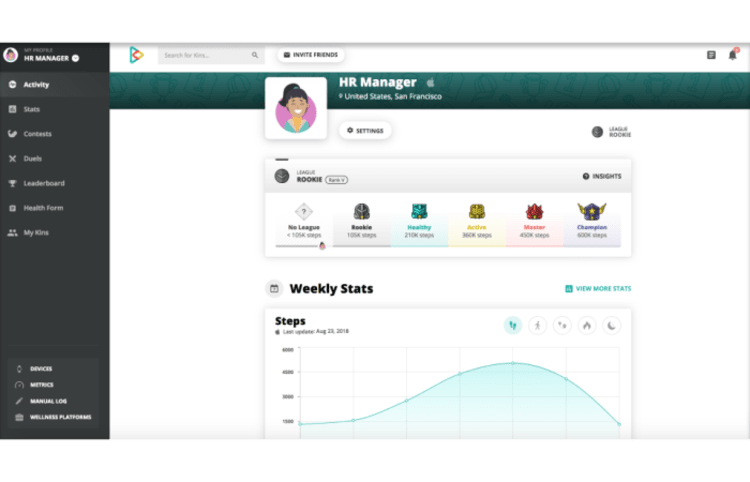
inKin Corporate Wellness
inKin supports many formats beyond steps, including water intake, team battles, weight loss, and sleep challenges. Every plan includes the full platform with unlimited admins and challenges, and no startup or cancellation fees.
Billing term drives the price hard here, and committing annually halves it. Worth noting before shortlisting: its app store ratings are the lowest in this comparison, at 2.9 on Android and 2.6 on iOS.
Recommended for: Budget-conscious teams that want several challenge formats beyond steps, and can accept lower app store ratings.
Android App
Yes (Rating: 2.9/5 ⭐️)
iOS App
Yes (Rating: 2.6/5 ⭐️)
Web-Based Portal
Yes
Various Fitness Challenges
User-friendly and Compatible with Most Gadgets
Tracks Wellness Using Data-driven Insights
Incentivization for Completing Challenges
Google
Uber
Deloitte
Twitter
P&G
BCG
Monthly
$6 /user/mo, pay as you go
Quarterly
$4 /user/mo, 25% off monthly
Annual
$3 /user/mo, 50% off monthly
Free Trial
7 days, no credit card required

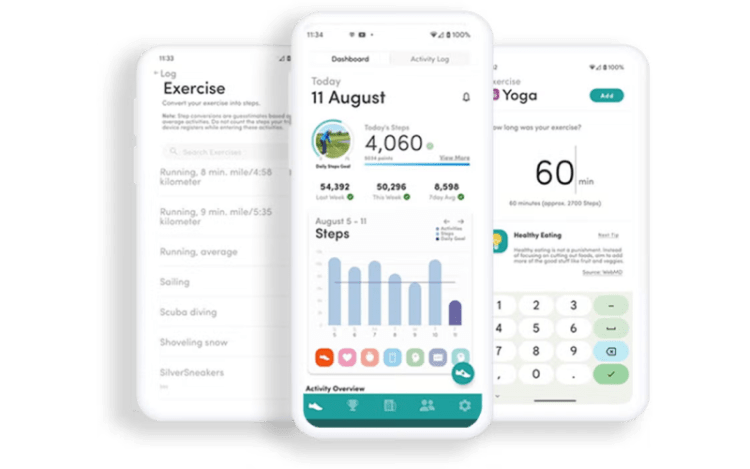
Terryberry
Terryberry makes walking challenges easy to launch, and employees can connect a tracker or convert other activities to steps in-app.
Its activity converter is a real inclusivity advantage, covering over 120 activities including wheelchair accessibility, so employees who cannot log conventional steps still compete on the same leaderboard. Recognition integration means step milestones trigger the same rewards as other achievements.
Recommended for: Companies that want walking challenges tied into an existing employee recognition and rewards program.
Android App
Yes (Rating: 4.2/5 ⭐️)
iOS App
Yes (Rating: 4.4/5 ⭐️)
Web-Based Portal
Yes
Map Challenges
Customizable Step Challenges
Recognition Integration
Seamless Integrations
Inclusive Exercises for Everyone
Tesco
Unilever
Ford
Jaguar
Land Rover
Custom Pricing
Not published; quoted on request
Duration
Choose a week, a month, or several months

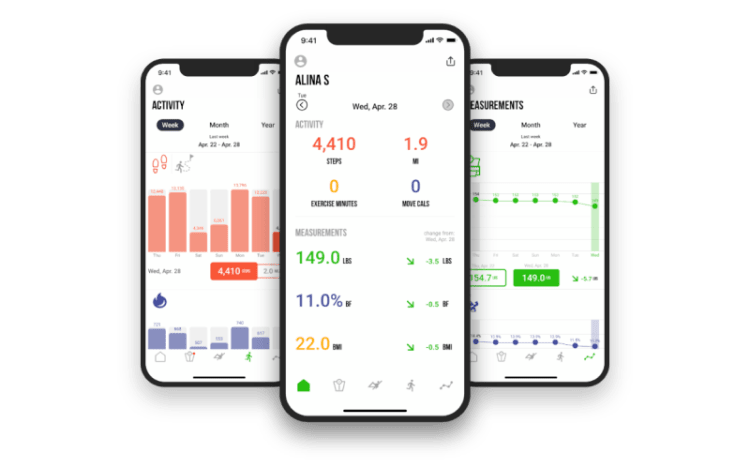
Strive Competitions
Strive runs competitions across 7 types: steps, miles, move calories, exercise minutes, weight, body fat, and BMI. Gamification and social interaction drive the motivation.
Check device coverage before committing. Strive still has no Android app and lists one only as a roadmap item, which rules it out for any workforce not predominantly on iPhone.
Recommended for: iOS-first teams wanting competitions across several health metrics, not steps alone.
Android App
No
iOS App
Yes (Rating: 4.6/5 ⭐️)
Web-Based Portal
Yes
Customizable Step Challenges
Gamification Elements
Real-time Leaderboards
Integration with Devices
Team and Social Features
Fair Harbor
Town of Babylon
Steves Doors
Free
Core app is free to use
Premium
Subscription required for premium features; amount not published

GoJoe
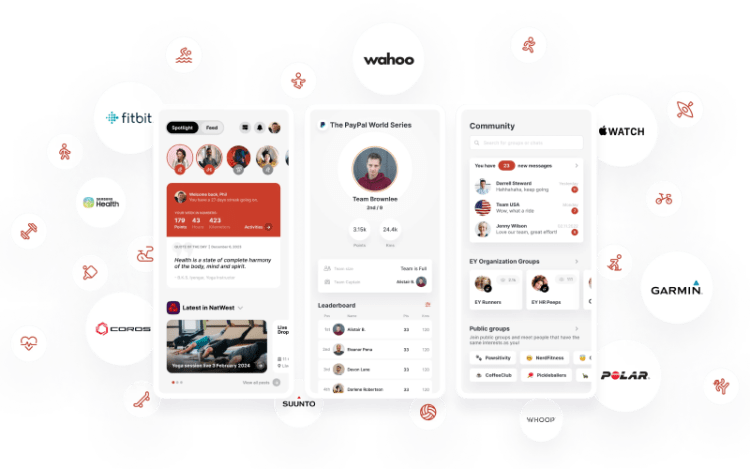
GoJoe blends social-media mechanics with fitness tracking, supporting 60+ activity types alongside steps. Employees compete individually or in teams, as a one-time event or an ongoing competition, with milestone rewards.
GoJoe no longer publishes flat per-user rates. Plans run from a single challenge to an annual subscription, with an optional incentives add-on, quoted through its calculator.
Recommended for: Companies looking to foster team spirit and improve employee health through interactive and engaging step challenges.
Android App
Yes (Rating: 4.5/5 ⭐️)
iOS App
Yes (Rating: 5/5 ⭐️)
Web-Based Portal
Yes
Customizable Challenges
Real-time Progress Tracking
Social Engagement
Gamification Elements
Integration with Fitness Trackers
Comprehensive Analytics
L'Oreal
PayPal
Shell
Unilever
NatWest
MARS
Challenge One-off
Per user per challenge; rate shown via on-site calculator
Challenge Annual
Per user per month, unlimited challenges
Reward Annual
Adds rewards marketplace and health programs
Currencies
GBP, EUR, USD, AUD
Free Apps Teams Use Without HR Reporting
These three are worth knowing about, but they are not corporate platforms. They count steps accurately and cost nothing, and none of them gives HR enrollment or participation reporting. Use them for a small team or an informal challenge, not for a program you have to justify at renewal.

StepUp Pedometer Step Counter
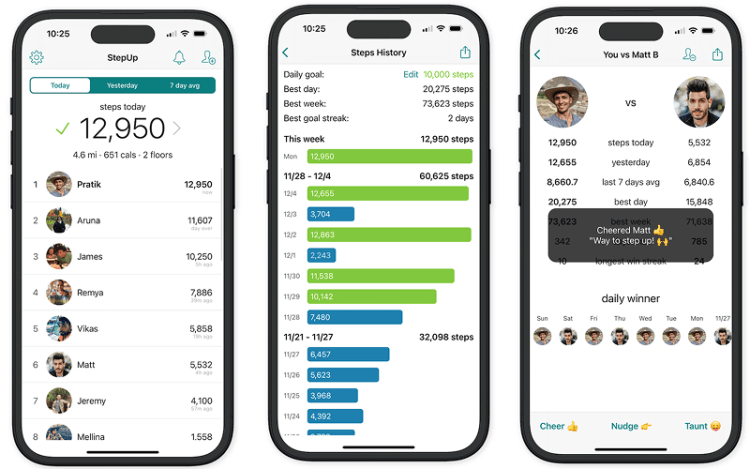
StepUp Pedometer is a lightweight step counter that works offline using phone sensors, so accuracy stays high and battery drain stays low. Real-time tracking, calorie counting, and progress charts are included.
Its strength for workplace use is the zero-friction start. Nothing to configure, no wearable to buy. The trade-off is that HR gets no participation dashboard.
Recommended for: Small teams that want a free, no-setup step challenge and do not need admin reporting.
Android App
Yes (Rating: 4.6/5 ⭐️)
iOS App
Yes (Rating: 4.8/5 ⭐️)
Web-Based Portal
Yes
True Offline Tracking
One-Tap Sync & Sharing
Customizable Step Goals & Reminders
Ultra-Low Battery Usage
Detailed Insights & Achievements
Adaptive Step Counting
Google
BMW
Meta
Amazon
Yale University
Free
Free step challenges, funded by minimal ads
In-App Purchases
Optional purchase to remove ads; amount not published

Empower by CharityMiles
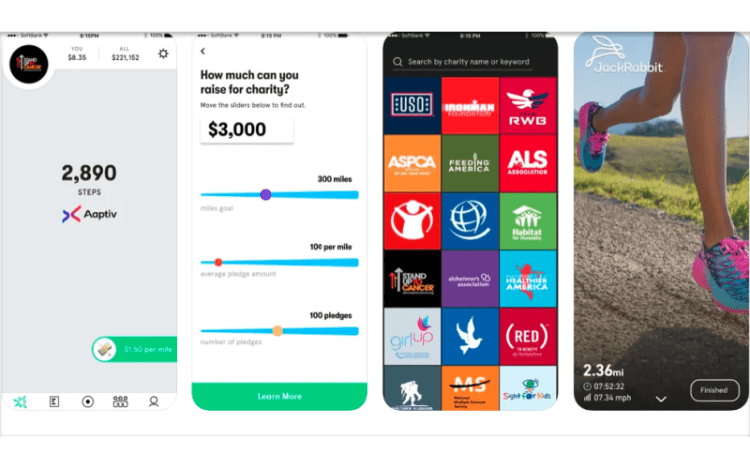
Empower by Charity Miles converts miles walked or run into donations funded by corporate sponsors, tracking steps, distance, and calories. Employees pick from over 40 charities including the ASPCA, Habitat for Humanity, and Feeding America.
It syncs with Fitbit and Garmin, so there is no manual entry, and progress can be shared with colleagues.
Recommended for: Companies tying a step challenge to a charitable cause or CSR goal at no software cost.
Android App
Yes (Rating: 4/5 ⭐️)
iOS App
Yes (Rating: 4.4/5 ⭐️)
Web-Based Portal
Yes
Raises Money for Charity
Individual Progress Tracking
Personal Goal Setting
Activity Tracking
Compatible with Fitness Trackers like Fitbit and Garmin
Boosts Employee Engagement
J.P. Morgan
ManpowerGroup
AT&T
Harman
Lincoln International
App
Free to employees
Corporate Empower Program
Quoted on request

Fitbit
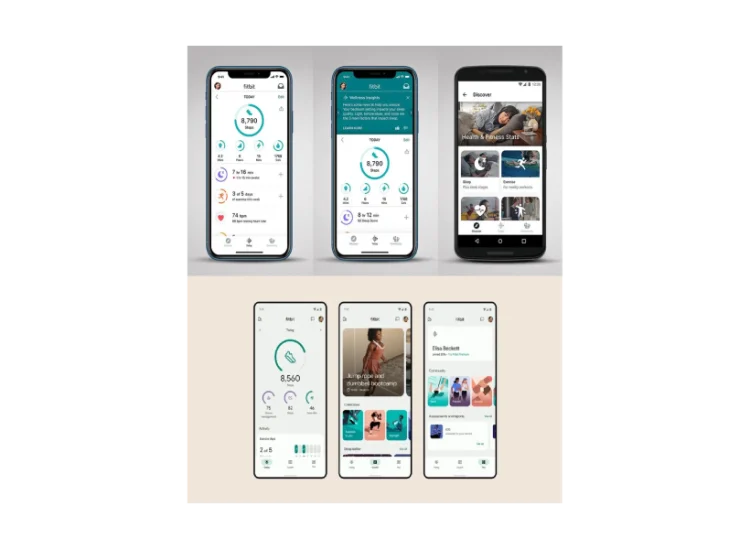
Important change since earlier versions of this list: Fitbit removed Challenges, Adventures, and Open Groups from its app on March 27, 2023, and Google has not reinstated them. Fitbit can no longer run a group step challenge.
What it still does well is measurement, tracking steps, distance, calories, and heart rate. So treat Fitbit as a data source, not a challenge platform. Employees keep their device and it syncs into a tool that runs the competition. Every other platform here accepts Fitbit data.
Recommended for: Organizations that already issue Fitbit devices and need a step data source to feed into a separate challenge platform, not a challenge tool in itself.
Android App
Yes (Rating: 4.2/5 ⭐️)
iOS App
Yes (Rating: 4.2/5 ⭐️)
Web-Based Portal
Yes
Accurate step, distance, and heart-rate tracking
Track Exercise modes for Walk, Run, and Hike
Syncs into third-party challenge platforms
Private closed groups still supported
Group Challenges, Adventures, and Open Groups discontinued March 2023
BP
Barclays
SAP
Daimler AG
Google
IBM
App
Free with the device; Fitbit Premium sold separately
Corporate Challenges
Not available; feature discontinued March 2023
How Much Does a Corporate Step Challenge App Cost?
Published pricing for corporate step challenge apps runs from about $1 to $6 per user per month. One-off challenge pricing sits around £4 to £4.40 per participant, or a base fee such as Big Team Challenge’s £500 covering the first 100 people. Enterprise tiers are quote-only, and reward budgets are almost always billed separately from the software.
The model matters more than the number. Per-participant pricing looks cheap for a 100-person pilot and gets expensive across 5,000 employees. Per-user-per-month reverses that, rewarding continuous programs over one-off campaigns.
Billing term is the other lever. inKin charges $6 per user monthly but $3 annually, so committing for a year halves it. Vantage Fit prices per employee per week on a volume curve, from $2.50 at 25 to 75 staff to $0.75 at 2,000.
Watch for quote-only vendors. Terryberry, MoveSpring, and GoJoe no longer publish rate cards, and Pacer has moved to a monthly model. Budget rewards separately, since gift cards sit outside the license.
Model the return at your own headcount with the free employee wellness ROI calculator before requesting quotes, or see the wider digital wellness platform comparison.
How Do You Run a Corporate Step Challenge?
Run a corporate step challenge in six steps: pick the format, set an inclusive daily goal, choose the app, build teams, announce it before launch day, and report results at the end. Most programs fail at the announcement stage, not the technology stage.
Choose the format. Team scoring beats individual leaderboards, because employees who will never win still matter to their team total.
Set the daily goal. Aim near 7,000 steps rather than 10,000, and allow activity conversion for people who swim, cycle, or use a wheelchair.
Pick the app. Use the five criteria above. Confirm phone-sensor tracking works so no one has to buy a wearable to join.
Build teams and name them. Naming is a real engagement lever. Borrow from these step challenge team names.
Announce and set prizes. Publish dates, rules, and rewards a week ahead. These step challenge prize ideas cover every budget.
Report the outcome. Share participation and total steps company-wide. That is what makes the next budget request easy.
Four to six weeks is the length most programs settle on. IBS Software ran March to Fitness for 28 days and reached 88% engagement. Distributed teams are no barrier either: Landmark Group’s 30-day virtual walkathon engaged over 5,000 people across six teams. For the full playbook, read the step challenge setup guide.
How Many Steps Should Your Daily Goal Be?
Set the daily goal at about 7,000 steps. A 2025 dose-response meta-analysis in The Lancet Public Health covered more than 160,000 adults. Ding Ding and colleagues found that health benefits rise steeply to roughly 7,000 steps a day, then plateau.
The familiar 10,000-step target was never derived from research. The
2025 review
shows benefit starting as low as 3,000 to 4,000 steps. An earlier
2022 meta-analysis of 15 cohorts
pooled 47,471 adults and found mortality risk leveling off at 8,000 to 10,000 steps under age 60, and 6,000 to 8,000 above it.
The practical consequence is participation. A 10,000-step default reads as unreachable to a sedentary employee, so they never start. Participants in the Tata Motors six-month step pilot averaged 6,246 steps a day, and that produced 59% engagement across 1,248 people.
Related read: How to Win a Step Challenge at Work: 15 Ethical Strategies
Benefits of Running a Corporate Step Challenge
Step challenges are the highest-participation activity in most corporate wellness programs, because walking needs no equipment, no training, and no gym. The industry baseline for sustained wellness participation is 20% to 30%. Well-run step challenges consistently beat it, and the Vantage Fit programs below cleared 59% to 88%.
Participation You Can Actually Report: Walking has the lowest barrier to entry of any wellness activity, so enrollment tends to beat the 20% to 30% industry baseline. IBS Software's 28-day March to Fitness challenge reached 88% engagement across 500+ participants.
Team Connection Across Locations: A shared leaderboard gives remote and hybrid employees a reason to interact outside project work. Landmark Group ran a 30-day virtual walkathon with more than 5,000 participants organized into six in-house teams.
Measurable Health Movement: Small, sustained increases matter more than hitting a headline number. Tata Motors' Step Up & Elevate Challenge saw average daily steps rise 6% to over 7,600, and 53% of the 43 participating teams reduced their average weight.
Recognition That Compounds: Tying redeemable points and badges to step milestones keeps momentum after the novelty fades. Simple rewards work well, including a mention in the company newsletter, a free healthy lunch, or letting the winning team choose the next challenge.
A mention in the monthly company newsletter.
A free healthy lunch for the winning team.
The option to pick the next wellness challenge.
Inclusive by Design: Activity conversion lets employees who swim, cycle, or use a wheelchair earn comparable credit, so the leaderboard is not limited to people who can walk long distances.
The programs that hold engagement past week two share one trait: an achievable goal, team scoring, and rewards that arrive without HR processing a spreadsheet.
Frequently Asked Questions
Q. What is the best corporate step challenge app?
A: Vantage Fit is best for companies wanting step challenges inside a full wellness program with rewards and reporting. Pacer for Teams suits one-off events. WeMove starts at $2 per user a month.
Q. How much does a corporate step challenge app cost?
A: Published pricing runs about $1 to $6 per user per month. One-off challenges cost roughly £4 per participant, or a base fee such as £500 for the first 100 people. Enterprise tiers are quote-only.
Q. How many steps should a corporate step challenge goal be?
A: About 7,000 steps a day. A 2025 Lancet Public Health meta-analysis found health benefits plateau near 7,000 steps, so a 10,000 target adds little and discourages less active employees.
Q. How long should a corporate step challenge last?
A: Four to six weeks works best. IBS Software's 28-day March to Fitness challenge reached 88% engagement. Shorter sprints hold attention, while longer programs need fresh milestones to prevent drop-off.
Q. Can employees join a step challenge without a fitness tracker?
A: Yes. Most corporate step challenge apps count steps using phone sensors through Apple Health or Google Fit. Wearables like Fitbit and Garmin are optional, not required to take part.
Q. What is a good participation rate for a corporate step challenge?
A: The industry baseline for sustained wellness participation is 20% to 30%. Good step challenges beat it. Tata Motors' Step & Stride Challenge reached 59% engagement across 1,248 active participants.
Q. Is a corporate step challenge app different from a step tracker app?
A: Yes. A step tracker counts one person's steps. A corporate step challenge app adds teams, leaderboards, admin dashboards, rewards, and reporting so HR can run and measure a company-wide program.
Q. Do corporate step challenge apps work for remote and global teams?
A: Yes. Virtual challenges put distributed employees on one leaderboard. Landmark Group's 30-day virtual walkathon engaged over 5,000 participants across six in-house teams in different locations.
Q. How do you stop cheating in a workplace step challenge?
A: Cap the daily countable steps, require device sync instead of manual entry, and review outlier spikes. Team-based scoring also reduces the payoff from cheating compared with individual leaderboards.
Q. Can you still run a step challenge on Fitbit?
A: No. Fitbit removed Challenges, Adventures, and Open Groups from its app on March 27, 2023, and Google has not restored them. Fitbit now works as a step data source that syncs into other platforms.
Q. What is the best free corporate step challenge app?
A: Empower by CharityMiles and StepUp are free to employees, and Strive has a free core app. inKin and MoveZenGo offer trials rather than free plans. Free tools rarely include admin analytics or reward automation.